Gone Without a Goodbye: The Omaha Neighborhoods That History Quietly Bulldozed
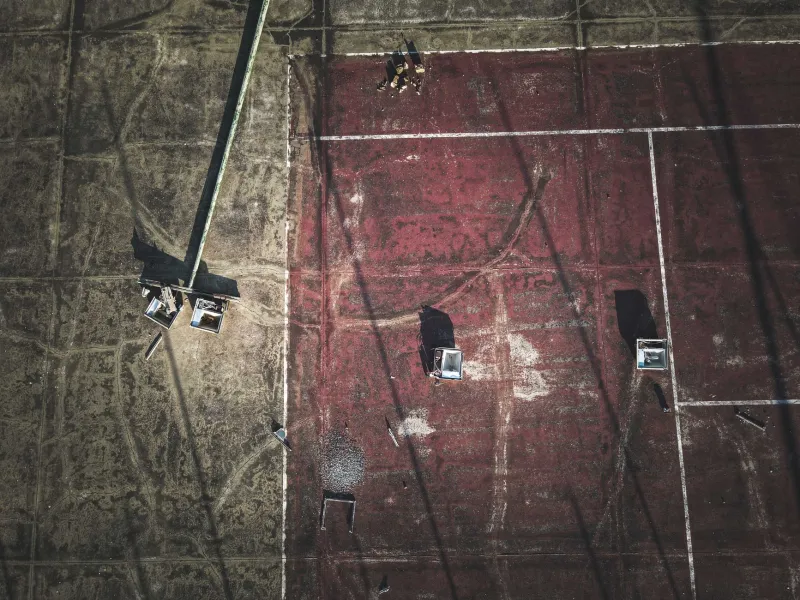
Every good mystery starts with something missing. In most of the cases I cover, that something is a person, or a secret, or a suspicious quantity of money. But today's case is bigger than any of those. Today, the missing thing is a neighborhood — or rather, several of them. Entire blocks of human life, scraped off the map with the clinical efficiency of a city council vote and the cultural memory of a goldfish.
Omaha does not talk about this much. Which is, of course, exactly why we should.
The Suspect: Urban Renewal (And Its Accomplices)
The phrase "urban renewal" sounds benign. Optimistic, even. Renewal implies something getting better, something being restored. In practice, across dozens of American cities during the mid-20th century, urban renewal was often a polite term for the systematic demolition of low-income and minority communities to make way for highways, civic projects, and development that benefited people who did not previously live there.
Omaha was not immune. In fact, Omaha was, in certain respects, a case study.
The Near North Side — once one of the most densely populated and culturally vibrant Black communities in the Great Plains — bore the heaviest losses. At its peak in the early 20th century, the neighborhood along North 24th Street was a self-sustaining ecosystem of Black-owned businesses, churches, jazz clubs, barbershops, and family homes. It was the kind of place that does not get built by accident; it gets built by people who have been told they are not welcome elsewhere and decide, with remarkable determination, to build something extraordinary anyway.
By the 1960s and 1970s, highway construction and urban renewal projects had carved through the neighborhood with what residents described, in oral history recordings archived at the Durham Museum, as something that felt less like progress and more like punishment.
The Testimony
Rosemary Jefferson was 12 years old when her family's house on North 22nd Street was condemned to make way for a project she did not fully understand. Now in her late 70s, she spoke with the Omaha World-Herald in 2019 about the experience with the kind of specificity that only comes from a memory you have carried for decades because nobody official ever asked you to set it down.
"We had a community," she said. "We had everything we needed. And then one day there were notices on the doors, and then there were bulldozers, and then there was nothing. And the city just moved on like it had never been there."
That erasure — the moving-on, the institutional amnesia — is what makes this feel, to the Mystery Man's finely tuned investigative instincts, less like an accident and more like a cover-up. Not a dramatic, shadowy conspiracy, but something in some ways worse: a bureaucratic decision made by people who did not particularly care what they were destroying, because the people whose lives they were destroying did not have the political power to stop them.
Logan Fontenelle: The Neighborhood That Became a Housing Project That Became Nothing
If the Near North Side is the central case, Logan Fontenelle is a sub-file worth pulling.
The Logan Fontenelle public housing project was built in the 1930s as a response to overcrowded and substandard housing conditions in North Omaha. It replaced an existing residential neighborhood — itself already a community with roots and relationships — and for several decades served as home to thousands of families.
By the late 20th century, the complex had become severely underfunded, poorly maintained, and associated in the public imagination primarily with crime statistics rather than the human beings who lived there. In 2002, the original buildings were demolished as part of a HOPE VI federal redevelopment program.
The current development on the site is quieter, better maintained, and considerably smaller. What it is not is a restoration of what came before. Two communities — the one that existed before Logan Fontenelle, and the one that existed within it — are now both gone, layered on top of each other like sediment, visible only if you know to dig.
Jobbers Canyon: A Different Kind of Erasure
Not every vanished Omaha neighborhood was a residential community. Jobbers Canyon was a commercial district — a collection of late 19th-century warehouse buildings along the Missouri River that had served as a wholesale distribution hub for the region. By the 1980s, the buildings were vacant, deteriorating, and, to the eyes of preservationists, extraordinarily beautiful.
They were demolished in 1989 to make way for the ConAgra campus. The decision was controversial enough to generate national attention in preservation circles; the buildings had been nominated for the National Register of Historic Places, and their demolition proceeded anyway.
The ConAgra campus is now largely gone too, the company having relocated its headquarters. The riverfront land sits in a kind of liminal state, neither what it was nor fully what it was supposed to become. It is, in its own way, a ghost story — the haunting of a place by two different vanished versions of itself.
The Evidence Left Behind
For anyone willing to do the archival legwork, traces of these lost communities are findable. The Durham Museum holds photographs and oral history recordings. The Omaha Public Library's Nebraska Room has city directories going back to the 1870s, which allow you to reconstruct, street by street, what kinds of businesses and families occupied spaces that are now parking lots or highway on-ramps.
Sanborn fire insurance maps — the same detailed building-by-building records that urban historians use across the country — show the footprints of structures that no longer exist, labeled with their original purposes: grocery, church, barbershop, residence.
These are not dramatic clues. They do not point to a single villain or a smoking gun. But they are evidence, in the truest sense: proof that something existed, that it mattered, and that its disappearance was not natural or inevitable.
The Cold Case, Open on the Desk
Here is what I keep coming back to, sitting with this particular file late at night with the kind of coffee that stopped being enjoyable two hours ago:
The crime of erasure is unusual because the evidence of its commission is also the evidence of what was lost. Every photograph of a demolished block is simultaneously a record of destruction and a record of what was destroyed. Every oral history is both testimony and exhibit.
Omaha has made genuine efforts in recent years to reckon with some of this history. The Great Plains Black History Museum, community oral history projects, and neighborhood advocacy organizations have worked to ensure that the stories of North Omaha's cultural peak are not lost entirely. That work matters.
But acknowledgment is not restoration, and memory — however carefully preserved — is not the same as the thing that was taken.
The case, as far as the Mystery Man is concerned, remains open. The neighborhoods are gone. The people who remember them are aging. And the city keeps building, mostly without looking back.
Somebody should be looking back.