Haunted and Ignored: Why Omaha's Ghost Stories Deserve a Lot More National Screaming
Every October, the same cities get trotted out for their annual ghost tourism moment. Salem does its thing. New Orleans rattles its chains. Gettysburg puts on the fog machine. And Omaha, Nebraska sits quietly in the middle of the country, nursing a Runza and a deeply underappreciated collection of paranormal encounters that would make any self-respecting ghost hunter weep with excitement.
Your correspondent — a man who once spent four hours in a reportedly haunted parking garage on Farnam Street on the basis of a tip from a stranger at a bar — has been cataloguing Omaha's supernatural reports for longer than is probably healthy. What I've found is a city with genuine, documented, historically-grounded ghost stories that somehow never make the national listicles. Today, we fix that. Partially. Dramatically.
Why Omaha Is Primed for Paranormal Activity (According to People Who Study This)
Before we get into the specific hauntings, it's worth addressing the elephant in the room: why would Omaha be particularly haunted? It's a fair question, and paranormal investigator Dana Hartwell — who runs a local investigation group called the Great Plains Anomaly Research Collective, a name I respect enormously — has a theory.
"Omaha has layers," she explains, with the calm authority of someone who has spent nights in genuinely unsettling buildings. "You've got Indigenous history that predates European settlement by centuries, then a very violent and rapid frontier period, then industrial-scale death from the meatpacking era, then decades of urban disruption where buildings were demolished and communities were displaced. That's a lot of unresolved energy in a relatively small geographic footprint."
She's not wrong about the history. Omaha's development was, by any reasonable measure, extremely chaotic and often brutal. The stockyards alone processed millions of animals annually at their peak and employed thousands of workers in conditions that the word "dangerous" would describe only on a very good day. The city's history includes epidemic disease, catastrophic floods, race riots, and the kind of industrial accidents that fill three paragraphs in a history textbook and approximately zero ghost tour brochures.
The Orpheum Theater: Applause from Empty Seats
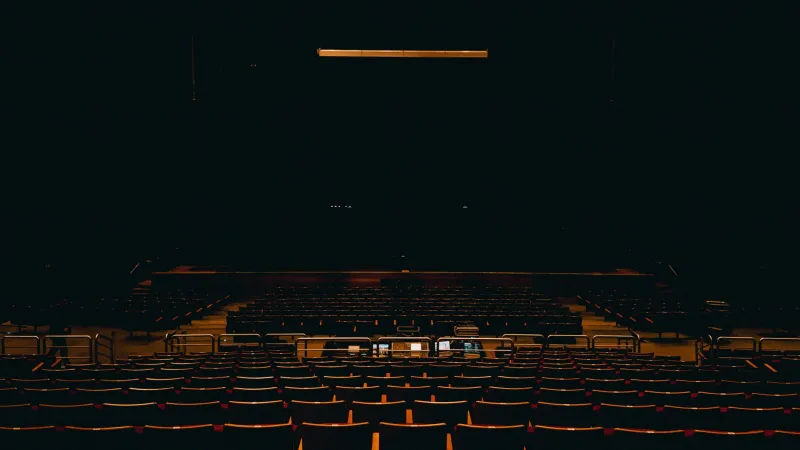
If Omaha has a flagship haunted location, the Orpheum Theater at 409 South 16th Street makes a strong case for the title. Built in 1927 and lovingly restored over the decades, the Orpheum is a genuine architectural treasure — and, if the accounts are to be believed, home to at least one permanent resident who didn't buy a ticket.
Staff and performers have reported, over many years, the sensation of being watched from the upper balcony when the house is empty, unexplained sounds during after-hours cleaning, and at least a handful of encounters with a figure in period clothing that disappears when approached. The theater's history includes the usual catalog of tragic events that seem to follow old performance venues: accidents during construction, sudden deaths, the particular melancholy of a building that has witnessed a century of human emotion.
Hartwell's group conducted an investigation at the Orpheum several years ago (with appropriate permissions, she emphasizes, twice) and recorded what she describes as "significant anomalous audio" in the upper balcony — sounds that, when cleaned up, appeared to include a voice. "We don't make claims lightly," she says. "But I'll tell you, nobody on the team was entirely comfortable up there after about midnight."
The Forest Lawn Cemetery Situation
Omaha's cemeteries have their own paranormal reputations, which is not exactly surprising — cemeteries are doing a lot of the heavy lifting in the haunting industry nationwide. But Forest Lawn Memorial Park has generated a specific and persistent category of reports that go somewhat beyond the standard "I saw a shadow and got scared" variety.
For decades, visitors and groundskeepers have reported encounters near the older sections of the cemetery that date to the late 1800s — specifically, interactions with figures that appear entirely solid and human until they don't. Multiple independent accounts describe asking directions from someone who then walks behind a tree or monument and fails to emerge on the other side. This is the kind of story that's easy to dismiss until you've heard it from six unrelated people who've never compared notes.
The historical context here matters. Several of the individuals interred in Forest Lawn's oldest sections died under circumstances that the local newspapers of the era described with varying degrees of euphemism. Frontier justice, industrial accidents, and the occasional duel (yes, duels — Nebraska had them) left behind a population of the violently departed that some investigators consider particularly likely to linger.
The Boys Town Connection
This one requires some delicacy, because Boys Town — the legendary institution founded by Father Edward Flanagan in 1917 — is a functioning organization that does genuinely important work and deserves respect. But the historic buildings on the campus have generated paranormal reports that even skeptics find difficult to entirely dismiss.
The older dormitory buildings and the original administration structures have been the site of recurring reports of children's voices, footsteps in empty corridors, and the inexplicable smell of food cooking in spaces that haven't housed a kitchen in decades. Given that the campus has housed thousands of at-risk and traumatized young people over more than a century, the emotional history of the place is, to put it gently, substantial.
Hartwell approaches this category of haunting with particular thoughtfulness. "Places that have held a lot of grief tend to hold onto something," she says. "I don't think that's sinister. I think it's just what happens when a location absorbs that much human experience."
So Why Doesn't Omaha Get the Ghost Tourism Love?
This is the question that genuinely puzzles me, and I've been asking it for years. The honest answer seems to involve a combination of factors: Omaha's Midwestern modesty (we don't love to brag, even about our ghosts), the relative lack of a dedicated paranormal tourism infrastructure, and the fact that the city's marketing apparatus has historically preferred to lead with the zoo and the College World Series rather than, say, "come see our haunted meatpacking district."
There's also the matter of documentation. Salem and New Orleans benefit from centuries of written records, published accounts, and a cultural tradition of storytelling that keeps the supernatural narratives alive and accessible. Omaha's ghost stories often live in oral tradition — passed between families, shared at bars, whispered by longtime residents who assume everyone already knows. They're real, they're persistent, and they're almost entirely off the national radar.
Mystery Man's modest proposal: someone should fix that. I'm available for guided tours. I own the deerstalker. Let's talk.