Where Did All the Rich People Go? Omaha's Vanishing Millionaires and Their Ghostly Mansions
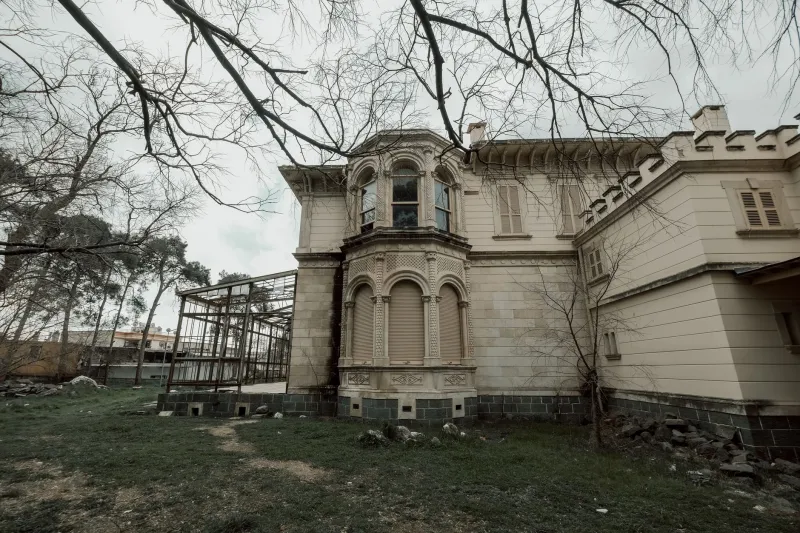
Omaha has a funny habit of forgetting its own grandeur. You can drive down what remains of Gold Coast — the stretch of Davenport and Dewey Streets that once served as Nebraska's answer to Fifth Avenue — and squint real hard trying to imagine the gaslit dinner parties, the imported marble staircases, and the kinds of mustaches that only obscene wealth can properly maintain. Some of it is still there, barely. A lot of it isn't. And the people who built it? Well, that's where things get interesting.
Your humble Mystery Man has spent a frankly unreasonable number of hours in the Douglas County Historical Society, the Omaha Public Library's archive room, and one very dusty antique store on Leavenworth Street, piecing together the strange saga of Omaha's Gilded Age elite — men who made fortunes so fast it would make a crypto bro weep with envy, built homes of staggering excess, and then, quietly, disappeared from the historical record like a name scratched out of a will.
The Boom That Built the Castles
To understand the vanishing act, you have to appreciate just how fast Omaha got rich. The transcontinental railroad's eastern terminus landed here in 1863, and the city essentially hit the jackpot. Meatpacking, grain trading, real estate speculation, and banking turned a frontier river town into a genuine economic powerhouse within a single generation. By the 1880s and 1890s, Omaha was flush with millionaires — and millionaires, as we all know, cannot resist building enormous houses.
The Gold Coast neighborhood became the address for families like the Kountzes, the Creightons, the Millards, and a rotating cast of beef industry titans whose names now mostly survive only on hospital wings and street signs. These weren't modest Victorian cottages, either. We're talking four-story brick fortresses with turrets, carriage houses bigger than most modern homes, and the kind of ornamental ironwork that screams I have more money than I know what to do with and I refuse to be quiet about it.
Local historian and Omaha preservation advocate Karen Driscoll (who has, by her own admission, "a slightly alarming obsession with old deed records") describes the era as "almost cartoonishly extravagant." She notes that several of these estates featured imported European furnishings, private greenhouses, and in at least one documented case, a bowling alley in the basement. For Nebraska in 1895, that's basically a Bond villain's lair.
The Great Disappearing Act
Here is where Mystery Man puts on his detective hat — metaphorically, though I do own an actual deerstalker that I wear around the apartment.
The Panic of 1893 was the first domino. A nationwide financial crisis hammered the railroad and agricultural industries that underpinned Omaha's wealth, and several prominent families found their fortunes evaporating with alarming speed. Some sold their mansions and quietly relocated to Chicago or the East Coast, where presumably the social circles were less aware of their recent humiliations. Others simply... stopped appearing in the newspaper society columns. No forwarding address. No farewell banquet. Just gone.
The Jobber's Canyon district — a commercial hub of ornate Victorian warehouses that was controversially demolished in 1989 to make way for the ConAgra campus — once housed the offices of several of these vanished dynasties. Researchers who've combed through the surviving business records describe ledgers that simply stop mid-entry, as though the bookkeeper walked out in the middle of a Tuesday.
One particularly tantalizing case involves a livestock broker whose name appears prominently in Omaha social records through 1897 and then vanishes entirely — not just from Omaha, but from any traceable record in the United States. Driscoll notes that this wasn't entirely unusual. "Some of these men had made enemies," she says with the careful understatement of someone who has read a lot of threatening letters in old archives. "Frontier capitalism was not a genteel enterprise."
What's Left Standing (And What It's Hiding)
Not all of the mansions fell to the wrecking ball or neglect. A handful of Gold Coast survivors still stand, converted into apartments, bed-and-breakfasts, or, in a few cases, office buildings that seem faintly embarrassed by their own grandeur.
The Bemis Park neighborhood preserves some of the finest remaining examples — hulking Queen Anne and Romanesque Revival homes that occasionally go up for sale and make the local news when buyers discover original features hidden under decades of unfortunate renovation choices. Pressed tin ceilings under drop tiles. Herringbone parquet under shag carpet. In one memorable 2019 case, a homeowner removing a wall found a sealed room containing period furniture and what appeared to be a gentleman's personal correspondence from 1902. The contents were never made public. (Mystery Man has tried. Repeatedly.)
The Joslyn Castle, built in 1903 for grain merchant George Joslyn, is the most famous survivor and is now operated as a cultural center. It's magnificent, it's well-documented, and honestly it's the least mysterious of the bunch precisely because it survived intact and in good hands. The real intrigue lives in the half-demolished, the converted, and the outright erased.
The Ones That Didn't Make It
For every mansion that survived, three more didn't. Urban renewal in the 1950s and 1960s took a devastating toll on Omaha's historic architecture, and the Gold Coast lost significant ground to highway construction and commercial development. Local preservationists speak about these losses with the particular grief of people who arrived too late to the crime scene.
Photographs in the historical society's collection show structures of genuine architectural ambition — turrets, wraparound porches, elaborate brickwork — reduced to parking lots. Several of these sites have had persistent rumors attached to them over the years: reports of unusual cold spots, the inexplicable smell of cigar smoke, construction workers who refused to return after the first day on a demolition job. Mystery Man neither confirms nor denies the validity of these accounts, but he does find them extremely compelling.
The Mystery That Remains
Omaha's Gilded Age is one of the city's most underexplored historical chapters, and the reasons for that neglect are themselves a little mysterious. The families who thrived here largely didn't endow the kinds of lasting cultural institutions that keep wealthy names in circulation. The archives are incomplete in ways that feel, occasionally, deliberate.
What we're left with is a city full of architectural ghosts — buildings that remember something their current occupants don't, on streets named after men whose stories have been largely swallowed by time. If you're the type to slow down while driving past an old brick mansion and wonder what happened to the people who built it, congratulations: you're already doing the work.
Mystery Man will be in the archive room if you need him. Bring coffee. This is going to take a while.