Basement Bebop: The Omaha Jazz Underground That Played Hard, Vanished Fast, and Left Almost No Evidence Behind
Let's get one thing straight: Omaha has always had a talent for keeping secrets. We've got tunnels under the Old Market, private societies that don't confirm their own existence, and apparently — if you dig deep enough into the right dusty archive — an entire jazz scene that somehow never made it into the history books. Not the local ones. Not the national ones. Not even the footnotes.
That's either a remarkable coincidence or the world's most successful cover-up of a good time.
The Scene That Shouldn't Have Existed — But Did
Here's what we know, pieced together from oral histories, a handful of old photographs, and the kind of secondhand testimony that historians politely call "anecdotal" and that we at Mystery Man of Omaha call "the good stuff."
From roughly the late 1930s through the early 1960s, a constellation of informal venues operated in the Near North Side neighborhood — unmarked rooms above barbershops, rented basements beneath social halls, and at least one location that multiple sources describe only as "the place on Lake Street with the green door." Nobody we've spoken to can agree on an exact address. The green door, it seems, moved around.
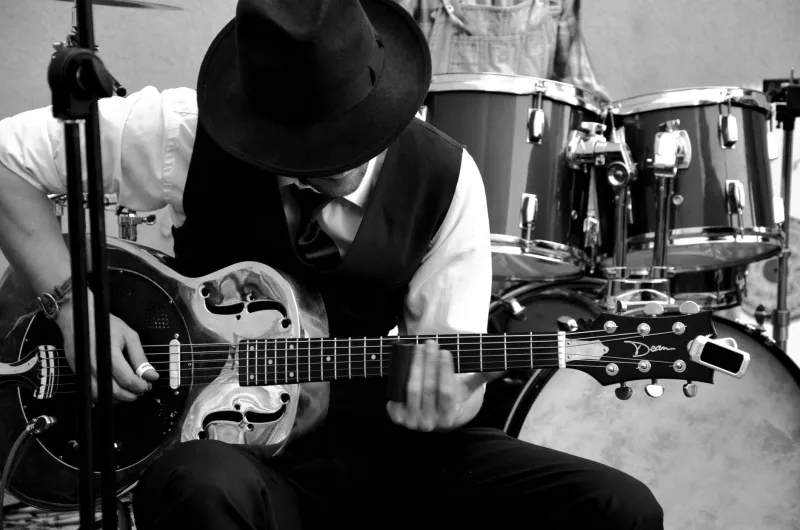
These weren't cocktail lounges with a piano player tinkling standards in the corner. By all accounts, this was serious, experimental music. Names come up in conversations — Roosevelt Bridges, a pianist said to have played with visiting musicians from Kansas City; a trumpet player everyone called "Sixty" whose real name nobody remembers; a whole rotating cast of performers who would appear for a weekend and vanish back into the touring circuit without leaving a single booking record behind.
The absence of paperwork, by the way, is itself suspicious. Or at least deeply inconvenient for anyone trying to write about this.
Why Omaha? Why Underground?
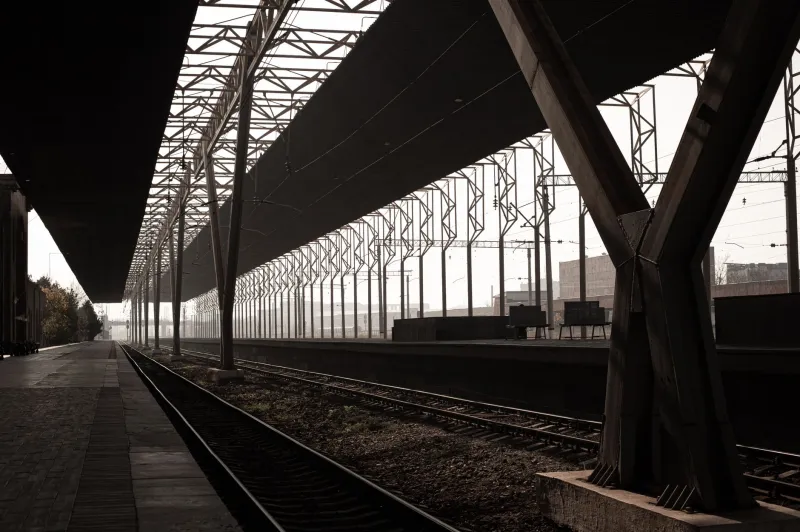
Omaha in the mid-twentieth century was a city of contradictions. It was a major railroad hub, which meant musicians traveling between Chicago and Kansas City had reason to stop. It had a Black community with deep cultural roots and a vibrant social life — and it also had the full weight of segregation pressing down on every public venue, every hotel, every "respectable" establishment that might otherwise have hosted this kind of talent.
So the music went underground. Not metaphorically underground. Literally into basements.
This pattern wasn't unique to Omaha — it played out in cities across the Midwest — but what's strange is how thoroughly Omaha's version of the story got erased. Kansas City's jazz history is celebrated. Chicago's is practically a municipal religion. Omaha's? You get a paragraph, maybe, in a regional music survey, and then the author moves on to something easier to document.
One theory, floated by a local historian we spoke with who asked not to be named (a request that only made us more interested in what they know), is that the underground nature of these venues made documentation actively dangerous at the time. Operators weren't exactly filing business licenses. Liquor wasn't always legal in the quantities being consumed. And in a city where racial tensions were a constant undercurrent, drawing official attention to an integrated gathering spot was an invitation for trouble nobody wanted.
So they stayed quiet. And then they stayed quiet forever.
The Musicians Who Went Somewhere Else
Here's the part that really gets under our skin. Several names that surface in connection with Omaha's underground scene show up later — sometimes decades later — in the biographical notes of well-documented musicians in other cities. A pianist who "came up in Nebraska." A horn player whose early influences included "sessions in Omaha" mentioned in a single interview from 1974 that nobody seems to have followed up on.
These breadcrumbs exist. They're just scattered across sources that were never meant to be read together.
The working theory — and we want to be clear that this is speculation dressed up in a trench coat — is that Omaha functioned as a kind of underground training ground. A place where talent developed away from the scrutiny of the established music industry, where experimentation happened precisely because nobody was watching, and where the lessons learned filtered outward into American jazz through the careers of musicians who quietly never mentioned where they'd started.
If that's true, then Omaha didn't just have a jazz scene. It had a jazz scene that shaped the broader sound of American music without ever getting credit for it. Which is either poetic or infuriating, depending on how much you care about attribution.
The Silence After the Music Stopped
Sometime in the early 1960s — the exact timeline is, predictably, unclear — the scene wound down. Urban renewal projects reshaped the Near North Side in ways that were devastating to the community that had hosted this music. Venues closed. People moved. The social networks that had sustained the underground dissolved.
And with them went the institutional memory.
The musicians who might have talked are mostly gone now. The venue operators, the regulars who showed up every weekend, the people who knew which door to knock on — that generation has largely passed. What remains are fragments: a photograph here, a name in a church bulletin there, the occasional elderly resident who gets a faraway look and says something like, "Oh, there used to be music around here. Real music."
Real music. Played in secret. By people whose names we're still trying to learn.
We're not done looking. If you have a grandmother who remembers the green door on Lake Street, you know where to find us.