Wrong Number, Right Secret: The Strange Coded Calls That Hummed Through Omaha's Depression-Era Phone Lines
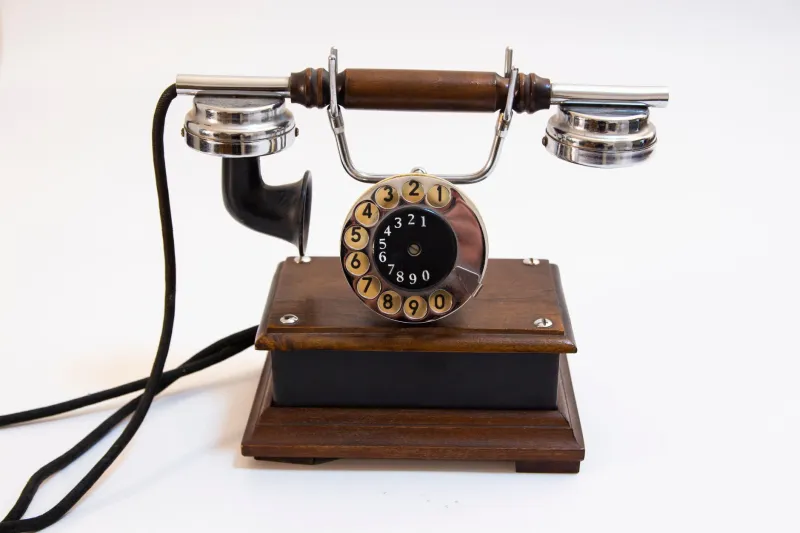
Omaha in the 1930s was broke, suspicious, and — depending on which block you were standing on — quietly thrilling. The Depression had a way of making people creative. Breadlines and bootleggers shared the same sidewalks. Political organizers met in church basements. Gangsters from Kansas City pushed north looking for friendlier territory. And somewhere in the middle of all of it, a bank of young women sat in front of glowing switchboards, plugging cables into jacks, and — allegedly — deciding which calls actually made it through.
That last part is the bit that keeps certain Omaha history nerds up at night.
The Switchboard as the Original Dark Web
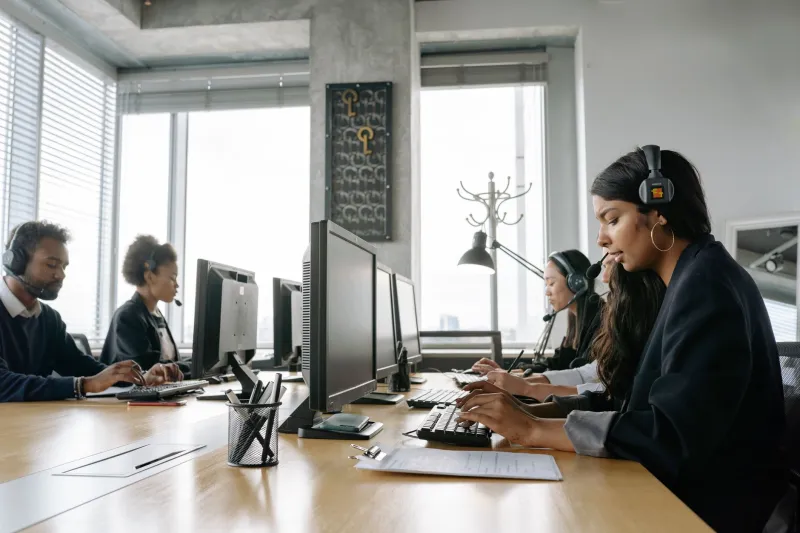
Before the internet gave us encrypted messaging and disappearing DMs, the telephone exchange was the most powerful communication bottleneck in any American city. Every call passed through a human being. Every connection was made by a hand. And in a Depression-era city like Omaha — where the Northwestern Bell exchange on Farnam Street processed thousands of calls a day — that human layer represented an extraordinary opportunity for anyone who needed information moved quietly.
The theory, circulating in local history circles for decades but rarely committed to print, goes something like this: a loose network of operators at several Omaha exchanges allegedly developed a system of deliberate misrouting, strategic delays, and coded verbal confirmations that allowed certain callers — organized labor activists, underground political groups, and yes, almost certainly some organized crime figures — to communicate with a layer of plausible deniability baked right in.
Missed a call? Operator error. Got connected to the wrong party? Happens all the time, sir. Line went dead at a suspicious moment? These things happen with the equipment.
Convenient. Very, very convenient.
What the Logs Don't Say
Here's where it gets genuinely strange. Northwestern Bell, like most regional telephone companies of the era, maintained detailed operator shift logs — records of complaints, misconnections, equipment failures, and disciplinary notes. These logs, for the Omaha exchanges covering the period from roughly 1931 to 1938, are either missing, fragmentary, or exist in a condition that one Nebraska historical archive staffer once diplomatically described to this writer as "enthusiastically water-damaged."
Now, water damage happens. Archives are imperfect. Nobody is necessarily suggesting that someone took a bucket to a filing cabinet on purpose.
But it is worth noting that the logs from the years immediately before and after this window are in comparatively excellent shape. The gap is specific. The gap is tidy. The gap is, to use a technical term, suspicious as heck.
What researchers have been able to piece together comes largely from oral histories collected by the Douglas County Historical Society in the 1970s and 1980s, when several elderly former operators were still alive and occasionally willing to talk — usually in the vague, elliptical way of people who learned long ago that certain things are better left half-said.
"Mother Never Talked About the Phone Company"
If you want to watch an Omaha old-timer get quiet in a hurry, try bringing up a grandmother or great-aunt who worked the switchboards in the thirties. This publication reached out to several families with documented connections to the Farnam Street and South Omaha exchanges during this period. The responses ranged from polite deflection to one memorably terse email that read, in its entirety: "She was a telephone operator. She connected calls. That is all."
That is, almost certainly, not all.
One family — we'll call them the Novaks, because they asked us to, and because they were at least willing to have a conversation — described a great-aunt who worked the South Omaha exchange from 1933 to 1941. According to her grandniece, the great-aunt was known within the family for two things: an almost pathological reluctance to use the telephone for the rest of her life, and a habit of going very still whenever labor union organizing came up in conversation.
"She'd just kind of... shut down," the grandniece told us. "Like a door closing. We always assumed it was something that happened to her. Now I wonder if it was something she did."
The Kansas City Connection
No Depression-era Omaha conspiracy theory worth its salt can avoid the long shadow of the Pendergast machine in Kansas City, which by the mid-1930s had tentacles reaching into Nebraska politics, law enforcement contracting, and — according to at least one FBI field report from 1936 that has since been partially declassified — "communications infrastructure in the Omaha metropolitan area."
What that last phrase means, exactly, the FBI apparently declined to elaborate on in writing. Helpful.
What we do know is that Omaha's geographic position made it genuinely valuable to anyone moving information between Chicago and Kansas City. It sat on the right rail lines, the right highways, and — critically — the right telephone routing infrastructure. A call placed through the Omaha exchange could be bounced, delayed, or rerouted in ways that made origin points significantly harder to trace with 1930s technology.
For organized crime figures accustomed to having their long-distance calls monitored by federal agents, an Omaha switchboard staffed by sympathetic operators wasn't just convenient. It was potentially essential.
What We Still Don't Know (Which Is Most of It)
Let's be honest about the limits here, because this is a story built as much on absence as on evidence. We have missing logs. We have families who won't talk. We have one tantalizingly vague FBI reference. We have oral histories full of careful silences. What we don't have is a smoking gun — or even a smoking telephone cord.
It's entirely possible that the Depression-era operators of Omaha were exactly what the official record suggests: hardworking women doing a difficult job under lousy economic conditions, whose privacy deserves to be respected and whose descendants have every right to tell nosy history bloggers to mind their own business.
It's also possible that somewhere beneath the water-damaged silence, there's a genuinely remarkable story about ordinary people who used an extraordinary position to quietly move the needle on something — labor rights, political resistance, criminal logistics, or some combination of all three — in a city that has always been better at keeping secrets than getting credit for them.
Omaha has a talent for that. You've probably noticed.
The Line Is Still Open
If your family has a connection to Omaha's telephone exchanges in the 1930s — if there's a great-aunt who got quiet, a grandfather who made suspicious long-distance calls, or a box of old operator shift notes inexplicably tucked behind a water heater somewhere — the Mystery Man of Omaha would genuinely love to hear from you.
We promise to be discreet. We've had practice.
And if you'd rather not call, you can always email. The operators aren't listening anymore. Probably.