Curtains Never Came Back Up: Stalking the Ghost Palaces of Omaha's Silver Screen Era
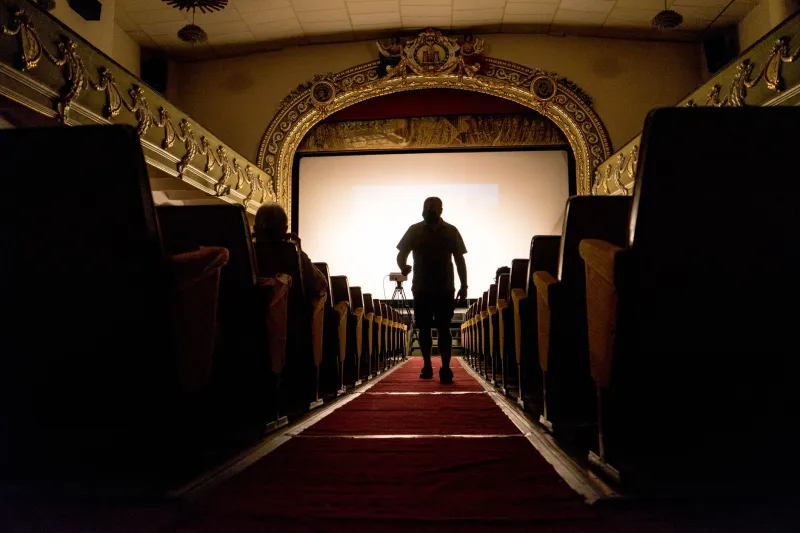
Let me paint you a picture. It's 1927. A man in a three-piece suit is standing on a Dodge Street sidewalk, jaw somewhere near his shoe leather, staring up at a movie palace so ornate it looks like someone glued the Vatican to a Babylonian ziggurat and then added a marquee. Thousands of Omahans lined up for opening night. The chandeliers alone cost more than most people's houses. The pipe organ was the size of a small submarine.
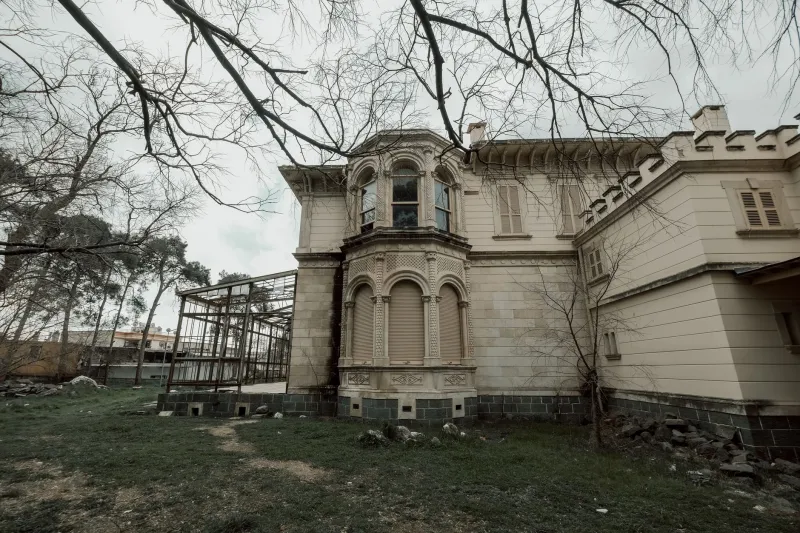
Now fast-forward to today. That same building — or something uncomfortably close to it — is draped in plywood and bird netting, its marquee letters long since stripped for scrap. A pigeon has taken up permanent residency above what used to be the projection booth. And if you lean in close enough to one of the gaps in the boarding, locals will swear you can still smell the ghost of buttered popcorn.
Welcome, fellow investigators, to the cold case of Omaha's vanished movie palaces. Pull up a velvet seat — assuming you can find one that hasn't been hauled off to an antique mall in Council Bluffs.
The Golden Age Nobody Talks About Anymore
At its theatrical peak, Omaha supported a staggering number of grand cinemas and performance venues for a city its size. The Brandeis, the Riviera, the Moon, the Paramount — names that once made Omaha feel like a legitimate cultural capital of the Great Plains. These weren't just movie houses. They were events. Architects imported design motifs from Moorish Spain, Imperial China, and what appears to have been fever dreams about ancient Egypt. Lobbies featured terrazzo floors, hand-painted ceilings, and enough gilded plasterwork to make a Bourbon king feel underdressed.
Omaha preservationist and self-described "accidental historian" Donna Kresge, who has spent the better part of two decades cataloguing the city's lost architecture, puts it bluntly: "People have no idea what was here. We're talking about interiors that rivaled anything in Chicago or Kansas City. And most of it is just... gone."
Gone, yes. But not entirely without a trace.
What Happened When the Lights Went Out
The decline wasn't dramatic. It was the slow, grinding kind — which is almost worse. Television arrived. Then suburban multiplexes. Then the long, ugly stretch of urban disinvestment that hollowed out so many American downtowns in the 1960s and '70s. One by one, Omaha's palace-era theaters shuttered, were carved up into retail spaces, or simply stood empty while the city argued about what to do with them.
Some met the wrecking ball. Others entered a strange limbo that urban explorers and amateur historians find equal parts thrilling and heartbreaking. A few still stand today in various states of arrested decay, their exteriors recognizable to anyone who knows where to look, their interiors sealed off from public access — which, naturally, only makes people more curious about what's inside.
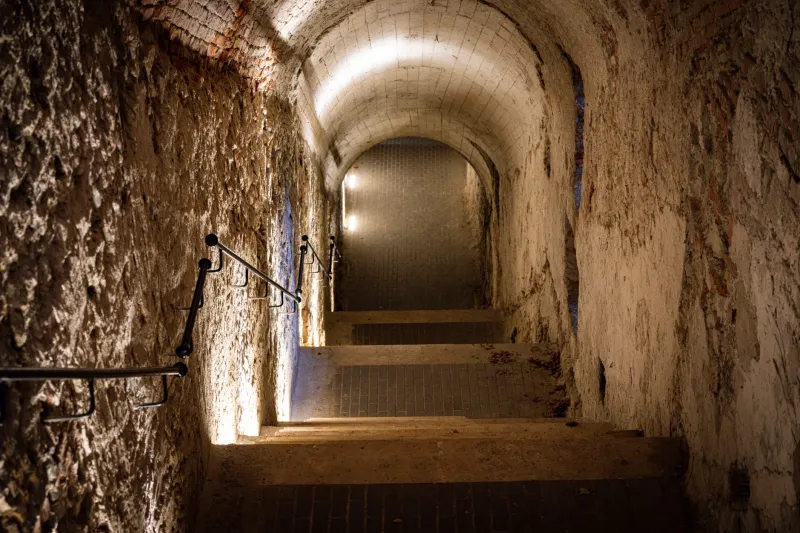
That curiosity is not unfounded. According to multiple longtime residents interviewed for this article, several of these structures contain backstage areas, sub-basement storage rooms, and utility corridors that were simply locked and left when the final showing ended. One retired electrician, who asked not to be named because he "really doesn't need that kind of trouble at his age," claims he did emergency repair work in one such building in the early 1990s and found an entire prop room still intact — costumes, painted backdrops, even a hand-lettered sign advertising a vaudeville act from 1941.
"It was like someone just walked out mid-show and never came back," he said. "I kept expecting to find a skeleton in a top hat."
The Rumors Get Weirder From Here
Because this is Omaha, and because we are the Mystery Man's people, the legends don't stop at dusty prop rooms. A particular building near the edge of the Old Market district — which we'll decline to name specifically, out of respect for the current property owner's blood pressure — has generated whispers for decades. Locals claim that during a 1970s renovation attempt, workers discovered a sealed chamber beneath the stage that contained old film canisters, a locked strongbox, and what one account describes as "ledgers that nobody wanted to read twice."
Is this true? Probably not entirely. Is it completely impossible given the labyrinthine nature of these old structures? Also probably not. Theater buildings of that era were built with extraordinary complexity — fly lofts, counterweight systems, dressing room warrens, loading docks that connected to alley networks. Plenty of room for secrets, intentional or otherwise.
Preservationist Kresge is skeptical of the more lurid tales but acknowledges the buildings hold genuine historical material. "We know for a fact that architectural elements, original equipment, and records were left behind in at least three of these structures," she says. "The question is whether anyone with authority over those buildings will ever let historians in to document them properly."
What Could Still Be Saved
Here's where this investigation takes a slightly more hopeful turn. Omaha has a track record — imperfect but real — of rescuing buildings that seemed beyond saving. The Orpheum Theater, which hosts Broadway touring productions today, was within a whisker of demolition in the 1970s before a community coalition pulled it back from the edge. It stands now as proof that these places can survive if the will exists.
Several preservation advocates are quietly working on assessments of the remaining at-risk structures. The challenge, as always, is money — and the even thornier question of what a restored 1920s movie palace actually becomes in 2024. Concert venue? Event space? Very fancy escape room? The economics are genuinely difficult, and anyone who pretends otherwise hasn't looked at a restoration budget recently.
But the alternative — continued decay until the buildings become genuine safety hazards and get demolished by default — strikes many as an unacceptable outcome for structures that represent a specific, irreplaceable chapter of the city's cultural history.
The Investigation Continues
The Mystery Man of Omaha does not have a key to any boarded-up theater. We want to be extremely clear about that, particularly to anyone in a position to issue trespassing citations. But we do have sources, and we do have questions, and we will keep asking them.
If you've got a story — a relative who worked in one of these places, a photograph from an opening night, or a very specific rumor about what's behind a particular set of locked doors — you know where to find us. The case file on Omaha's ghost palaces is very much still open.
And somewhere behind all that plywood, we're pretty sure, the pipe organ is waiting.