Forty Years of Silence: The Dead Lawyer's Safe Deposit Box and the Code Nobody Was Supposed to Crack
There's a particular kind of quiet that settles over a dead man's unclaimed property. It's not the peaceful kind. It's the kind that makes you feel like you're being watched by someone who isn't there anymore.
Sometime in the mid-1970s, an Omaha estate attorney — let's call him Gerald, because that's what people who handle other people's secrets deserve — was working through the assets of a recently deceased client when he opened a safe deposit box that had been sealed since at least the early 1950s. He expected the usual: a will, maybe some bonds, perhaps a pocket watch with sentimental value and no monetary worth to speak of.
What he found instead was a bundle of handwritten letters, tied with ordinary kitchen twine, every single one of them written in a cipher that nobody in his office could read.
No family member ever claimed them. No heir ever asked about them. And for reasons that remain genuinely unclear, the letters quietly disappeared into private hands rather than public archives — only to resurface decades later in the collection of a local historian who'd rather not be named but was gracious enough to share photographs.
Welcome, fellow investigators, to the Omaha Cipher.
What the Letters Actually Look Like
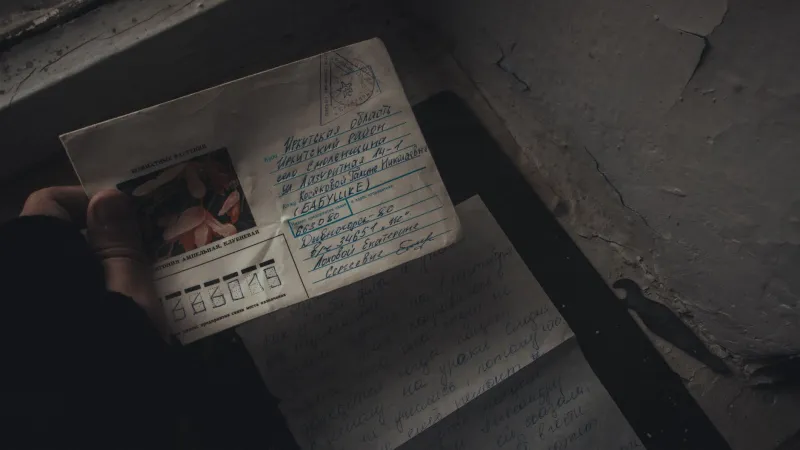
The photographs show twelve letters of varying length, each written on standard correspondence paper in a confident, unhurried hand. Whoever composed these wasn't scribbling frantically. They were methodical. Patient. The kind of person who probably pressed their shirts and arrived to meetings five minutes early.
The cipher itself is a substitution system at its core — meaning letters of the alphabet have been replaced with symbols — but there's a secondary layer that's tripped up every amateur who's taken a crack at it. Certain recurring symbol clusters don't behave the way standard substitution ciphers behave. They shift. They appear in different configurations depending on their position in a sentence, suggesting either a more sophisticated polyalphabetic cipher or, as one local cryptography enthusiast suggested with barely contained excitement, "a codebook that we simply don't have."
The dates on the letters, written in plain numerals, span from 1943 to 1951. Make of that timeline what you will.
Who Was the Original Owner?
This is where it gets murky in the best possible way.
The safe deposit box belonged to a man whose estate records describe him as a "retired civil servant" with modest assets and no surviving immediate family. His name appears in Omaha city directories through the late 1940s, and then — in the great tradition of people who have something to hide — he simply stops appearing. No obituary in the major papers. No death notice. Just an absence where a person used to be.
What we do know, thanks to some genuinely heroic digging through Douglas County records, is that he had a connection to at least two Omaha businesses during the war years, one of which had a documented — if politely ignored — relationship with figures later investigated for war surplus fraud. We're not naming names here, because Mystery Man of Omaha has a lawyer of its own and a healthy respect for the concept of "alleged."
But the circumstantial geography is suggestive. Somebody was communicating something sensitive enough to encode, during a period when sensitive communications were very much a growth industry.
The Amateur Cryptographers Weigh In
We put the photographs in front of three people who do this kind of thing for fun — which is the best kind of people — and got three different theories.
Theory one: it's a modified Playfair cipher with a keyword derived from a song or poem that would have been personally meaningful to the sender and recipient. If you can find the keyword, the whole thing unravels.
Theory two: the shifting clusters indicate a running-key cipher, where the key is a separate text — a book, a newspaper column, a Bible passage — applied sequentially. Without the source text, you're essentially trying to untangle headphone cords in the dark.
Theory three, which is our personal favorite: it's not a formal cipher at all. It's a private language, developed organically between two people over years of correspondence, and it only ever made sense to them. Which would mean it's essentially unbreakable, and also extremely romantic in a deeply suspicious way.
What Are They Hiding?
The honest answer is that we don't know. But the fun answer — and this is an entertainment website, so we're allowed to have fun — is that the content almost certainly falls into one of three categories.
First possibility: financial. The war years and their immediate aftermath were a golden era for creative accounting in the Midwest. Surplus goods, black market transactions, and the kind of handshake agreements that never touched paper unless they absolutely had to.
Second possibility: personal. People in the 1940s encoded all sorts of things that simply couldn't be written plainly — relationships, identities, arrangements of the heart that society at the time had no patience for.
Third possibility: something genuinely operational. Omaha during the Cold War's early years was not the sleepy cow town its reputation suggests. Strategic Air Command was headquartered here. People passed through. Information moved. And not all of it moved through official channels.
Any of these would explain the cipher. None of them explain why the letters were never retrieved.
Help Us Crack It
Here's where you come in, dear reader, because Mystery Man of Omaha believes firmly in the democratization of amateur detection.
We're publishing high-resolution photographs of three of the twelve letters — selected because they show the widest variety of symbol patterns — and we're asking the community to take a swing. If you have a background in cryptography, linguistics, wartime communication history, or you just really like puzzles and have strong opinions about the Playfair cipher, we want to hear from you.
The letters have waited forty years. They can wait a little longer. But not forever — and honestly, neither can we.