Ghost Notes: Hunting the Phantom Jazz Dens That Once Made Omaha Swing — and Whatever's Still Humming Beneath the City
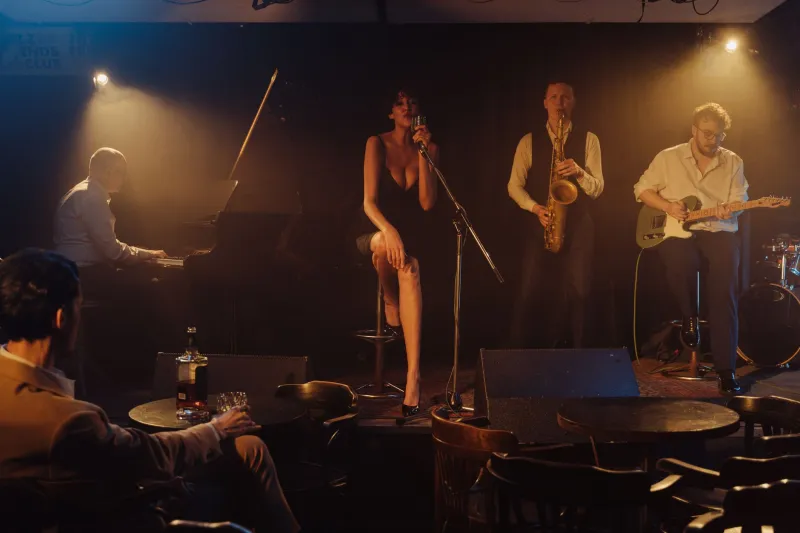
Let me paint you a picture. It's 1962. You're standing on North 24th Street at midnight. The air smells like cigarette smoke, fried catfish, and possibility. From somewhere behind an unmarked door — third building on the left, the one with the busted streetlight that nobody ever seems to fix — you can hear a trumpet doing things that ought to be illegal in at least four states. Welcome to Omaha's jazz underground, friend. Now blink, because it's gone.
Omaha's thriving mid-century jazz scene is one of the most spectacular acts of collective municipal amnesia this city has ever pulled off. For roughly three decades — from the late 1940s through the early 1970s — North Omaha pulsed with live music venues, after-hours clubs, and what polite historians might call "informal entertainment establishments" and what everyone else called "the joints." Then, with very little fanfare and almost no documentation, the whole scene dissolved. No farewell tour. No commemorative plaque. Just... ghost notes.
The Mystery Man of Omaha has a problem with things that disappear without explanation. So naturally, I went looking.
The North 24th Street Corridor: Omaha's Forgotten Main Stage
If you want to understand where Omaha's jazz culture lived and breathed, you have to understand the geography of the Near North Side during segregation. With Black Omahans largely excluded from downtown entertainment venues, North 24th Street became its own sovereign republic of culture. Clubs, ballrooms, barbershops, and restaurants stacked up along that corridor like a brass section warming up for the main event.
Names that surface repeatedly in oral histories include the Dreamland Ballroom — which, unlike some of its shadier cousins, was actually well-documented and has received some historical recognition — and a constellation of smaller, far less official venues with names like the Blue Room, the Jockey Club, and a place referred to in multiple accounts simply as "Benny's," whose precise address seems to shift depending on who's remembering it. That geographical slipperiness, by the way, is not an accident. Places that operated in legal gray zones tended to have fluid addresses as a matter of survival.
Archival detective work turns up tantalizing fragments. A 1957 edition of the Omaha Star — the city's historic Black newspaper — contains an advertisement for a "late-night musical revue" at a location described only as "the usual place on Lake Street." The usual place. As if everyone already knew. Which, apparently, they did.
The Architecture of Secrecy
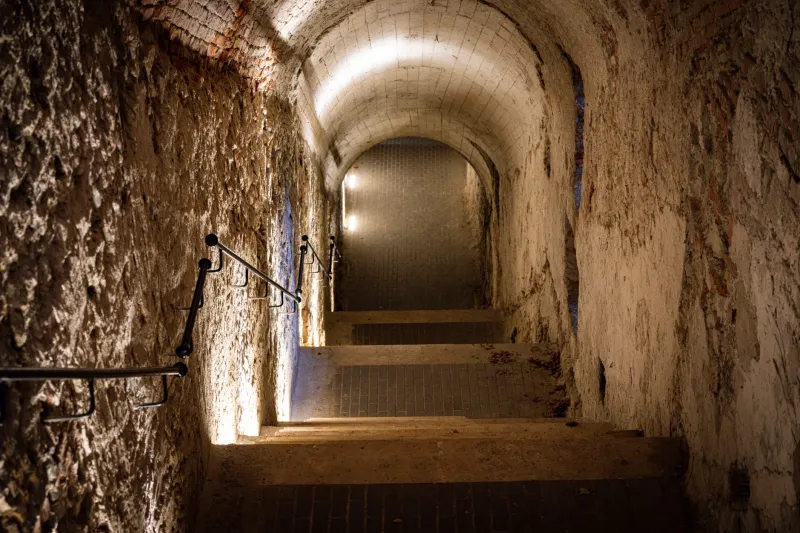
Here's what made Omaha's underground jazz circuit genuinely underground: a lot of it operated through the same kind of layered concealment that this site has previously documented in the context of the city's tunnel networks and private societies. Front businesses — a barbershop here, a restaurant there — would conduct perfectly legitimate commerce by day and transform after a certain hour into something altogether more interesting.
One surviving account, shared with a local oral history project in the early 2000s, describes a club that operated behind a furniture repair shop. The front room smelled like varnish and wood shavings. The back room smelled like bourbon and ambition. The music reportedly didn't start until well past midnight and continued until someone's wife showed up looking for someone's husband, which served as an informal last call.
This isn't just colorful anecdote — it reflects a genuine structural reality. Without access to mainstream licensing, capital, and legal protection, Black-owned entertainment businesses developed their own informal infrastructure. The secrecy wasn't romantic. It was adaptive.
Who Was Playing, and Why Don't We Know Their Names?
This is the part that genuinely haunts me, and I don't use the word "haunts" lightly on this website.
Omaha sat at a geographic crossroads for touring musicians moving between Kansas City and Chicago. Artists who later became legends — or who deserved to — passed through North Omaha on circuits that were never formally recorded. Local musicians of considerable talent played residencies at clubs that left no paper trail beyond a few classified ads and the memories of people who are now in their eighties and nineties.
Conversations with elderly North Omaha residents — conducted through community organizations and senior centers, because the Mystery Man does his homework — surface names that appear nowhere in the official jazz historiography. A pianist described as "the best left hand in the Missouri Valley." A vocalist whose recordings, if they exist at all, have never been catalogued. A bandleader who allegedly turned down an offer to relocate to Chicago because, as one source put it, "he said Omaha needed him more." Whether that was loyalty or stubbornness is left as an exercise for the reader.
The absence of documentation isn't neutral. It's a choice the historical record made, and it's one worth being angry about.
Urban Renewal and the Great Silencing
If you want to find the moment the music stopped, look at the urban renewal projects of the late 1960s and early 1970s. Omaha, like dozens of American cities, used federal redevelopment funds in ways that — depending on your level of historical charity — either modernized struggling neighborhoods or systematically demolished Black cultural infrastructure. The near North Side took hits from which, architecturally and culturally, it never fully recovered.
Clubs that had survived Prohibition, the Depression, and decades of unofficial existence couldn't survive the wrecking ball. And because so much of the scene operated informally, there were no property records to fight over, no business licenses to transfer, no legal standing to claim. The erasure was, in its way, almost perfectly efficient.
Is Anyone Still Playing?
And now we get to the part where the Mystery Man puts on his best trench coat and starts asking uncomfortable questions in dimly lit rooms.
Omaha has a visible, legitimate jazz scene today — venues like Reverb Lounge have hosted serious talent, and the jazz studies program at the University of Nebraska at Omaha produces genuinely accomplished musicians. But visible and legitimate are not the only categories available.
Multiple sources — and I will not be more specific than that, because I enjoy having sources — suggest that the tradition of informal, after-hours, invitation-only musical gatherings never entirely died. The venues are different. The music has evolved. The secrecy is arguably more aesthetic than practical now, a kind of deliberate throwback rather than a survival mechanism. But the basic proposition — people who love jazz, playing for other people who love jazz, in a room that isn't advertising itself — apparently persists.
I didn't get an invitation. I'm choosing to interpret that as proof that the scene is doing exactly what it should be doing.
The Case, Such As It Is
Omaha had a jazz culture that was richer, stranger, and more significant than the official history acknowledges. Much of it was deliberately hidden during its lifetime and has been accidentally hidden ever since. The musicians who built it deserve better than footnotes, and the venues that housed it deserve better than demolition without record.
If you're old enough to remember the clubs on North 24th Street, or if your parents or grandparents talked about them, the Mystery Man of Omaha is genuinely asking: write it down. Send it in. The cold case file on Omaha's jazz underground is officially open, and every ghost note helps.
Somewhere in this city, if my sources are even half-right, a trumpet is doing things that ought to be illegal in at least four states. The usual place. You probably already know where it is.