Hooves Above, Hooch Below: The Hidden Highways That Ran Beneath Omaha's Meatpacking Empire
Let me paint you a picture. It's 1924. Above your head, roughly four thousand cattle are doing what cattle do — loudly, and with very little dignity. The stench is extraordinary. Federal agents are theoretically on the lookout for illegal liquor operations. And yet, somewhere beneath the mud and manure and the general chaos of the Union Stock Yards, a man in a good suit is rolling a barrel of rye whiskey through a tunnel that smells only marginally worse than the world above it.
Welcome to one of Omaha's most persistently whispered-about secrets: the alleged tunnel network beneath the historic stockyards, and the curious arrangement it may have facilitated between cattle barons and bootleggers during the Prohibition years.
A City Built on Beef — and Convenient Infrastructure
By the early twentieth century, Omaha's Union Stock Yards were among the largest livestock markets in the entire world. At peak operation, the complex sprawled across more than 250 acres in South Omaha, processing millions of animals annually and generating a financial ecosystem so vast it essentially built the city's early skyline. Banks, hotels, commission houses, and private exchange buildings clustered around the yards like barnacles on a very profitable ship.
And underneath all of it? Tunnels.
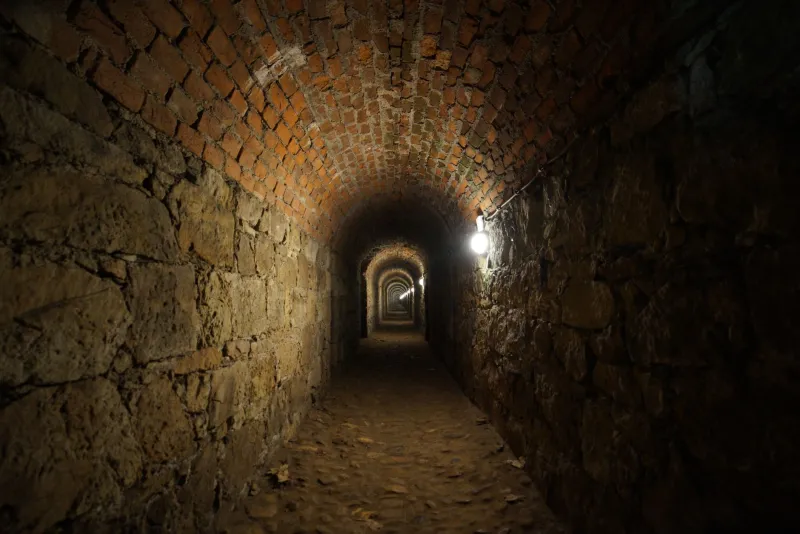
This part is not disputed. The stockyards legitimately required underground infrastructure — utility conduits, drainage channels, and passageways that allowed workers to move between buildings during Nebraska winters that could freeze a man's ambitions solid in about forty-five minutes. The Exchange Building, that grand 1898 structure that served as the nerve center of the whole operation, connected to several adjacent structures via underground corridors. Functional, practical, unremarkable.
Except that "functional and practical" has a funny way of attracting people with other ideas.
Enter the Cattle Kings and Their Interesting Friends
Prohibition arrived in Nebraska in 1917, a full three years before the Volstead Act made it a federal headache. That gave Omaha's entrepreneurial class an impressive head start on figuring out workarounds. The city's meatpacking district, conveniently located away from downtown's more scrutinized saloons, became a natural staging ground.
Local historian and longtime South Omaha neighborhood advocate Dorothy Krajicek — who spent decades collecting oral histories from former stockyard workers and their descendants — described what she heard repeatedly from old-timers. "The men who worked those tunnels for legitimate purposes knew every inch of them," she explained in a 2019 interview for a community archive project. "And knowledge like that doesn't stay proprietary for long when there's money involved."
The alleged arrangement, pieced together from archival documents, old newspaper court records, and the kind of family stories that get told quietly at kitchen tables, goes roughly like this: certain commission agents and livestock brokers — men with both the financial resources and the social connections to matter — reportedly allowed tunnel access points on their properties to be used as transfer nodes. Liquor coming in from Council Bluffs across the Missouri River, or distilled in the basements of South Omaha's dense immigrant neighborhoods, could be moved through existing underground channels with considerably less exposure than a wagon rolling down a public street.
The Paper Trail That Almost Wasn't
Here's where the Mystery Man in me gets genuinely excited, because this is the part where the evidence gets interesting and the mainstream historical record gets suspiciously quiet.
A 1928 federal Prohibition enforcement report — buried for decades in the National Archives' regional collection and surfaced by researcher and Creighton University history lecturer Paul Metzger — references "subterranean conveyance routes" in the South Omaha meatpacking district without elaborating further. The agents clearly knew something. They equally clearly chose not to pursue it with much vigor, which raises the obvious question: who, exactly, were they not pursuing it for?
The stockyards were economic royalty. The men who ran the commission houses and the exchange weren't just wealthy — they were the kind of wealthy that funded political campaigns, endowed church buildings, and got streets named after them. Federal agents in Omaha during Prohibition had a documented and frankly impressive track record of looking the other direction when the right names were attached to an operation.
Metzger, who has spent years trying to formally document the tunnel network's Prohibition-era use, puts it plainly: "The historical silence around this isn't accidental. It's architectural. The people who would have written the official record had every reason not to."
What's Actually Down There Now
This is the part where urban exploration becomes genuinely complicated, and I say this as someone who has spent an embarrassing amount of time trying to find out.
The Union Stock Yards ceased full operations in 1999 after more than a century of continuous use. The Exchange Building still stands — it was placed on the National Register of Historic Places in 1999 and has been partially redeveloped — but the vast majority of the surrounding infrastructure is gone, demolished, or inaccessible. The South Omaha Business District has been working to reclaim and repurpose the area for years, with mixed but genuinely interesting results.
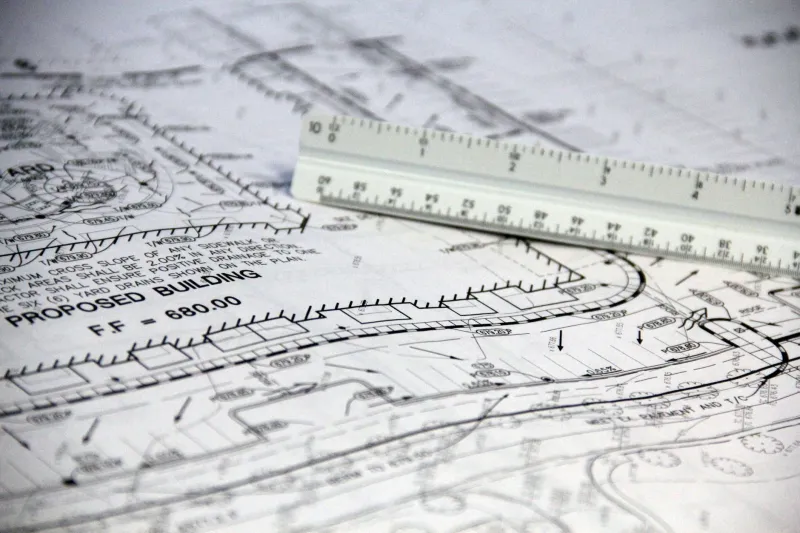
What remains of the tunnel network is difficult to assess. Former workers interviewed by the Douglas County Historical Society in the early 2000s confirmed the existence of underground passages connecting several buildings, but the redevelopment process has sealed, collapsed, or simply built over much of what was there. One contractor who worked on a demolition project in the area in the mid-2000s told me, with the particular expression of a man who has seen things he can't entirely explain, that his crew encountered "more passages than the blueprints showed" before they were told to stop asking questions and start pouring concrete.
Make of that what you will. I certainly have.
Why This Story Keeps Getting Buried
South Omaha's immigrant communities — Czech, Polish, Lithuanian, and others — built their lives around the stockyards and the meatpacking plants. Their descendants are still here. Some of them carry stories about the Prohibition years that haven't made it into any official history, because the official history was never particularly interested in asking.
There's also the question of legacy. The cattle barons of Omaha's meatpacking era are commemorated in street names, institutional donations, and the occasional bronze plaque. Connecting those names to bootlegging operations — even a century after the fact — is the kind of thing that makes certain historical societies visibly uncomfortable at their annual dinners.
But that discomfort is, in its own way, the most interesting part of the story. History doesn't get buried because it's unimportant. It gets buried because it inconveniences someone.
The tunnels beneath the stockyards — the ones that definitely existed for legitimate purposes, and may have served considerably less legitimate ones — are a perfect metaphor for how Omaha has always operated: practical on the surface, considerably more complicated six feet down.
Somewhere under the redeveloped lots and the poured concrete and the politely unasked questions, those passages are still there. And if walls could talk, these particular walls would have a lot to say about the arrangement between the men who moved cattle and the men who moved whiskey, and how neatly, for a few remarkable years, their interests aligned in the dark.
Got a tip about South Omaha's underground history? Know someone whose grandfather worked the stockyards and maybe mentioned something interesting at Thanksgiving? The Mystery Man is, as always, listening. Knock twice.