Lights Out: The Ghostly Fate of Omaha's Grand Movie Palaces and the Projectionists Who Flickered Into Thin Air
Somewhere in a storage unit in Bellevue, Nebraska, there is reportedly a cardboard box containing three antique carbon arc lamp housings, two reels of unidentified 16mm film, and a handwritten log of every movie ever screened at a theater that no longer exists. The man who owns that box refuses to name the theater. He says it would "break his heart all over again."
This is the part of Omaha's history that doesn't make the tourism brochures.
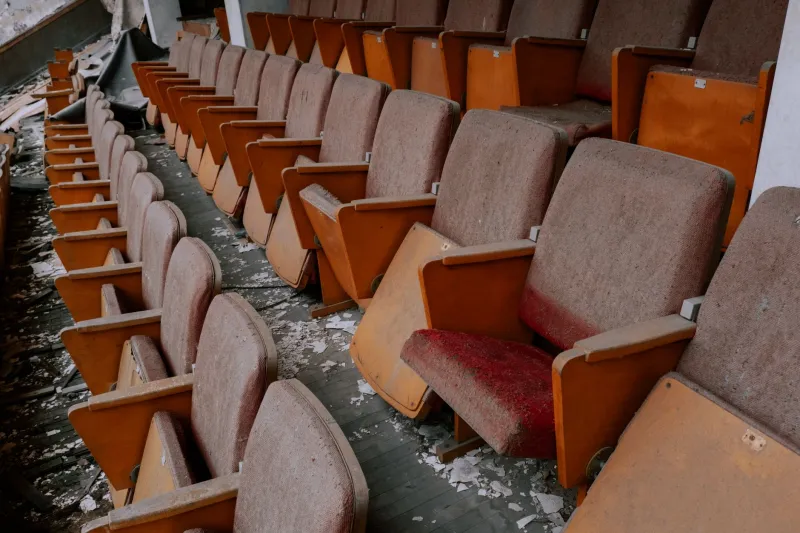
Omaha was once a city that took its movie palaces seriously. Not in the casual, multiplex-and-a-bucket-of-popcorn way we understand cinema today, but in the full-throated, baroque, almost religious sense of the word. These were temples. And like a lot of temples, most of them are gone — demolished, gutted, converted into parking garages, or simply sealed up and left to quietly deteriorate behind padlocked doors while the city shuffles past without a second glance.
The Mystery Man has been doing some digging. What follows is part architectural eulogy, part detective story, and part love letter to the weirdos who kept the projectors running.
The Golden Age Nobody Talks About
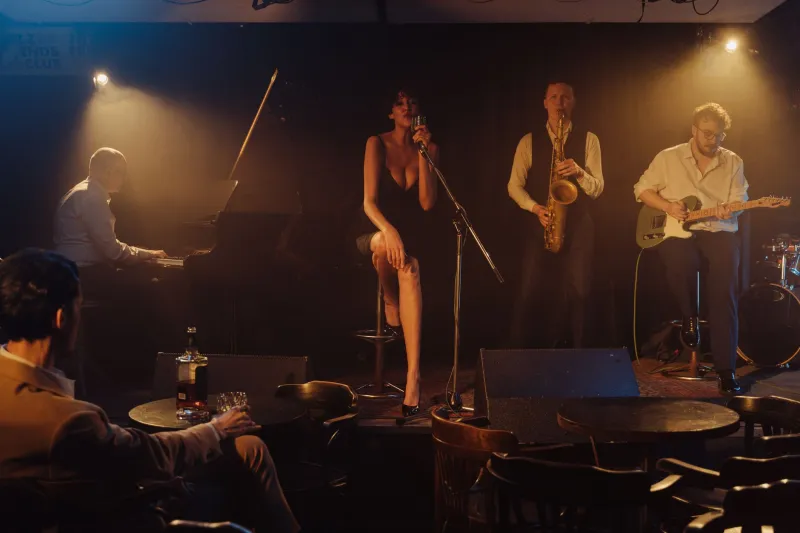
At its peak in the mid-20th century, Omaha boasted dozens of movie houses spread across its neighborhoods. You didn't have to travel far to find one — they existed on corners the way coffee shops do now, each with its own personality, its own smell (popcorn, cigarette smoke, old carpet, and something ineffably cinematic), and its own cast of regulars.
The Paramount. The Orpheum — which, miraculously, still stands on Farnam Street, though it now hosts touring Broadway productions rather than Saturday matinees. The Riviera. The Astro. The Sun. The Dundee. Each name conjures a different flavor of nostalgia, depending on who you ask and how old they are when you ask them.
"The Riviera had this chandelier," recalls one former usher who worked there in the early 1970s and asked not to be named because, and we quote, "my grandkids think I'm dignified." "It was enormous. Ridiculous. Like someone had robbed a European palace and just hung the thing up without asking any questions. You'd walk in off the street in the middle of a Nebraska winter and suddenly feel like you were in a different century."
The Riviera is gone now. The chandelier's whereabouts are unknown.
The Projectionists: A Brotherhood of Shadows
If the theaters were temples, the projectionists were their high priests — and they were, by nearly every account, magnificently strange human beings.
Projection booths were notoriously isolating places to work. You spent your shift in a small, hot, mechanically deafening room perched above the audience, watching a movie you'd already seen forty-seven times through a small porthole window, responsible for a piece of equipment that could literally catch fire if you weren't paying attention. This selected for a very particular type of personality.
"They were tinkerers, mostly," says Dave Kowalski, a retired cinema technician who worked across several Omaha houses in the 1980s and is one of the few people willing to go on record. "Guys who were more comfortable talking to a Bell & Howell projector than to another human being. And I mean that affectionately, because I was absolutely one of them."
Kowalski describes a subculture with its own rituals, its own hierarchy, and its own dark humor. Senior projectionists guarded their booth access like medieval guild masters. Film reels were handled with a reverence bordering on the ceremonial. And the union — the International Alliance of Theatrical Stage Employees — meant that projectionists had a professional network that stretched across the country, a shadow community humming along behind every movie screen in America.
"When a theater closed, you didn't just lose a building," Kowalski says. "You lost a whole ecosystem. The projectionist, the manager, the popcorn lady who'd been there since 1958 and knew everyone's name. They scattered. Some retired. Some moved to other cities. Some just... stopped talking about it."
What's Left Behind the Locked Doors
This is where the urban exploration instinct kicks in, and we will be transparent: the Mystery Man did not personally trespass into any sealed former cinema. We are a responsible publication. We merely talked to people who may have.
What these anonymous sources describe inside Omaha's sealed and semi-abandoned former theaters ranges from the poignant to the genuinely eerie. Projection booths left intact, equipment still mounted, as if the last projectionist simply walked out mid-reel and never came back. Concession stands with vintage signage still adhered to the walls. Ticket booths with their little glass windows intact, the stool still sitting inside, waiting for someone who isn't coming back.
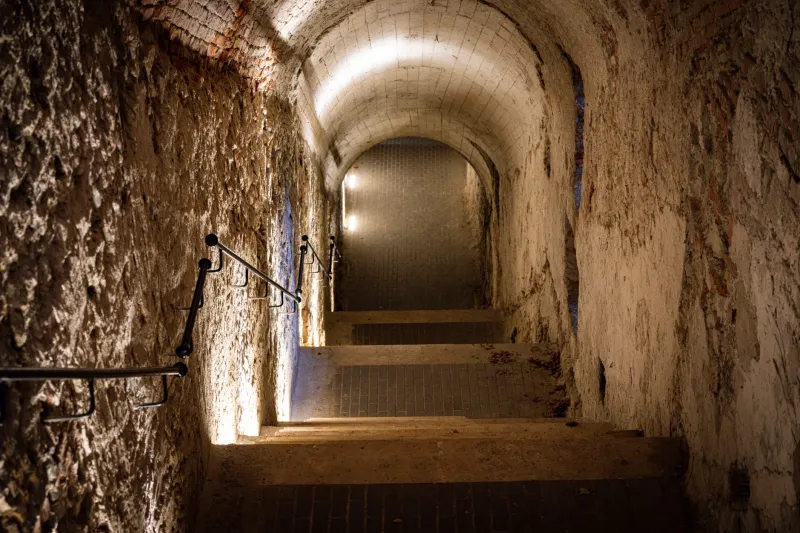
One source — a self-described "urban history enthusiast" who communicates exclusively through a burner email address — sent us photographs of what appears to be a former theater's basement storage area, still containing original film canisters from the 1960s. The labels were too degraded to read. The source says the building is in a neighborhood they declined to specify and that the entrance involved "a door that technically wasn't locked if you knew how to ask nicely."
We are choosing to believe that means they knocked very politely.
The Conversion Problem
Not every lost cinema met a bulldozer. Some survived through transformation — which is a polite way of saying they were stripped of everything that made them cinemas and turned into something else entirely.
Omaha has former movie houses that are now churches, which is at least thematically consistent. Others became furniture showrooms, event spaces, or in one particularly melancholy case, a self-storage facility. The architecture sometimes survives — a grand facade here, an ornate ceiling there — marooned in a context that makes no sense of it.
"It's like finding a crown in a dumpster," says local architectural historian and occasional Mystery Man tipster Margaret Fells. "The object is intact, but it's been completely divorced from its meaning."
Fells has been cataloguing Omaha's lost and converted theaters for over a decade, and she describes the project with the weary energy of someone who keeps finding more evidence of the crime than they expected. "Every time I think I've got the full picture, someone tells me about another one. A little neighborhood house that ran for thirty years and then just... closed. No fanfare. No preservation effort. Just gone."
The Reel Still Turns
Here's the thing about a city's movie culture: it doesn't vanish cleanly. It haunts.
The Orpheum still stands, and thank every available deity for that, because its interior is a genuinely breathtaking time capsule of what Omaha's theatrical ambitions once looked like. The Film Streams organization operates out of the Ruth Sokolof Theater and keeps the spirit of serious cinema alive in a way that would make the old projectionists nod with approval, even if they'd probably have opinions about the digital projection equipment.
And in storage units, in attics, in the careful keeping of people who can't quite let go, the artifacts persist. Carbon arc housings. Film logs. Uniform buttons from an usher's jacket. A chandelier that may or may not have survived its theater's demolition.
The Mystery Man is officially putting out a call: if you worked in one of Omaha's vanished cinemas — as a projectionist, an usher, a manager, a popcorn vendor, or a professional chandelier-admirer — we want to hear from you. The booth may be dark, but the reel is still turning.
Knock twice. We'll be in the projection booth.