Baton Down the Hatches: The Omaha Conductor Who Vanished Mid-Season and Left an Orchestra Full of Questions
Let me set the scene for you.
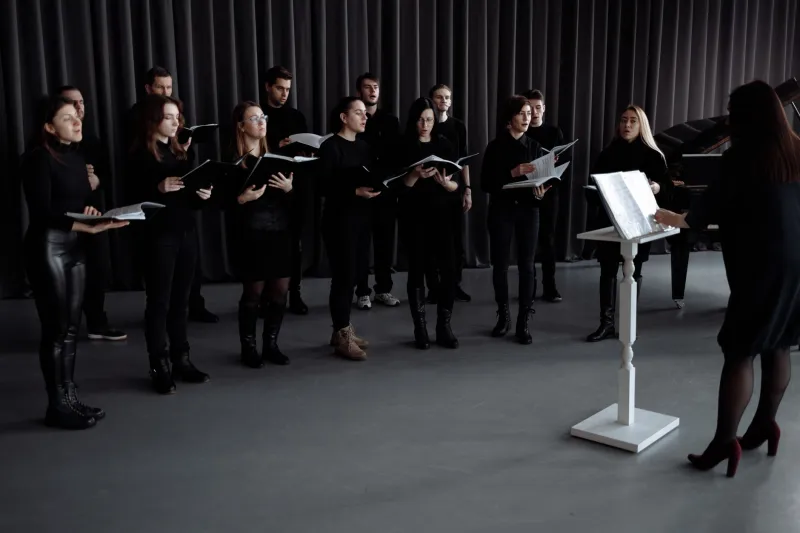
It's the mid-1950s. Omaha is the kind of city that knows it's not New York, but it's also the kind of city that refuses to act like that's a problem. The symphony hall is packed on a good Friday evening. Women in good coats. Men in ties that cost more than their car payments. And up front, wielding a baton like a man who genuinely believes music can rearrange your internal organs in a pleasant way, stands the conductor everybody simply called The Maestro.
Then one day — mid-season, no warning, no farewell concert, no tearful press release — he's gone.
And Omaha, being Omaha, mostly just moved on.
But not entirely. Because some of us can't let a good mystery just sit there untouched.
The Man Behind the Baton
For the purposes of this investigation, let's call him Maestro V. That's not his real name, but the surviving musicians who played under him asked for a layer of discretion, and frankly the mystery is more interesting when we let it breathe a little.
Maestro V arrived in Omaha sometime in the late 1940s with an impressive European pedigree, a wardrobe that suggested he'd never once considered the concept of casual Friday, and a reputation for coaxing sounds out of regional orchestras that those orchestras had no business making. By all accounts, he transformed Omaha's mid-century music scene. Concert attendance climbed. Local newspapers ran profiles. A department store downtown reportedly named a cocktail after him, which is either the highest honor a city can bestow or a deeply confusing one, depending on your perspective.
Musicians who played under him describe a complicated figure. Demanding, yes. Occasionally terrifying during rehearsals, absolutely. But also, by multiple accounts, a man with a genuine and almost evangelical belief that Omaha deserved world-class music and that he was personally obligated to deliver it.
So what happened?
The Night the Podium Went Dark
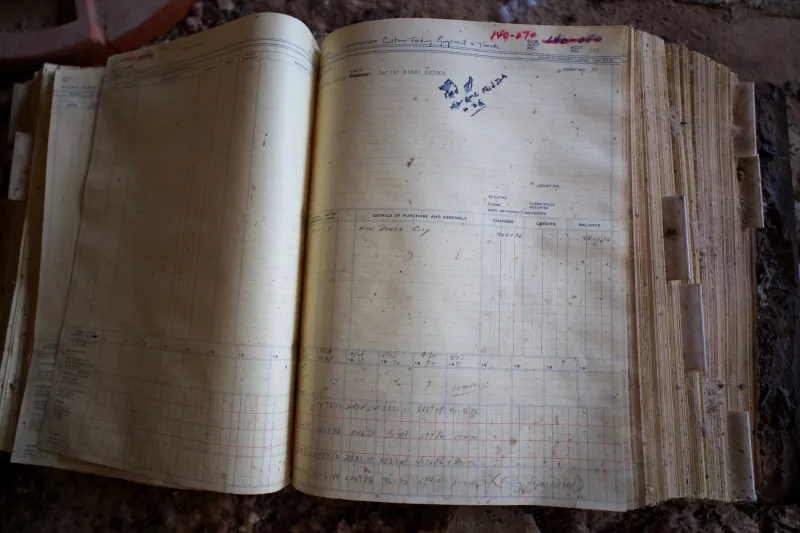
Here's what the newspaper archives tell us, which is frustratingly little: somewhere in the middle of a concert season — sources disagree on exactly which year, which is itself suspicious — Maestro V submitted a terse resignation letter to the symphony's board of directors. The letter, according to a musician who claims to have seen a copy, contained fewer than four sentences and offered no explanation beyond a vague reference to personal circumstances requiring immediate attention.
The symphony board, demonstrating the institutional instinct for self-preservation that boards have practiced since the dawn of time, issued a brief statement thanking him for his service and announcing an interim conductor. Local newspapers ran small items. Nobody dug deeper.
This is where the Mystery Man of Omaha puts on his detective hat and starts asking uncomfortable questions.
Theory One: The Burnout Nobody Talked About
The most charitable explanation, and the one that several aging musicians lean toward, is simple artistic exhaustion. Running a regional orchestra in mid-century America was not glamorous work. The funding was precarious, the politics were brutal, and the gap between what a conductor of Maestro V's ambitions wanted to do and what the budget actually permitted was apparently a source of constant, grinding frustration.
"He wanted to do things that nobody in Omaha had ever done," one retired violinist told me, choosing her words carefully over coffee. "And when the board kept saying no, I think something in him just... deflated."
Burnout is real. Burnout is human. But burnout alone doesn't usually produce a four-sentence resignation letter with no forwarding address.
Theory Two: The Scandal That Stayed Quiet
Omaha in the 1950s was very, very good at keeping certain things quiet. The city had a long and well-documented tradition of looking the other way when the wrong people were involved, a tradition that this very website has covered extensively in contexts ranging from gambling rackets to banking irregularities.
Several sources — none of whom would go on record, all of whom seemed genuinely uncomfortable — suggested that Maestro V's departure may have been accelerated by a personal situation that the symphony board decided was incompatible with their public image. What exactly that situation was remains frustratingly unclear. Romantic? Financial? Political?
One source used the phrase the wrong friendship at the wrong time and then immediately changed the subject. Which, as any amateur detective will tell you, is basically a neon sign pointing directly at the thing you're not supposed to look at.
Theory Three: He Just Left
This is the theory that sounds the least dramatic and might actually be the most interesting.
There's evidence — circumstantial, fragmentary, the kind of evidence that would get laughed out of a courtroom but fits perfectly in a mystery blog — that Maestro V had been quietly putting out feelers to orchestras in other cities for at least a year before his resignation. A letter in a university archive, uncovered by a music historian who had no idea she was sitting on anything interesting, references a conductor matching his description applying for a position in the Pacific Northwest. A name in a 1957 concert program from a small Oregon city bears a striking resemblance to his.
Maybe he didn't vanish. Maybe he just relocated and nobody in Omaha cared enough to follow the trail.
Which is, honestly, its own kind of sad.
What the Musicians Remember
The most valuable testimony in any cold case comes from the people who were actually in the room. I tracked down three musicians who played under Maestro V during his Omaha tenure. All three are in their eighties now. All three have opinions.
The consensus portrait that emerges is of a man who was brilliant and brittle in equal measure — someone who poured everything into his work and had, perhaps, not left enough in reserve for whatever came after. One musician, a former cellist, described the final weeks before the resignation as strange and quiet, noting that Maestro V had stopped making his customary post-rehearsal remarks to the ensemble. "He used to talk to us like we were the most important people in the world," she said. "And then he just stopped. Like the lights went out."
Another musician, a trumpet player with a long memory and a short tolerance for sentimentality, put it more bluntly: "Something happened. I don't know what. Nobody told us anything. That's how it was back then."
The Cold Case That Nobody Opened
Here's the thing about Omaha's mid-century cultural history: it's full of gaps. People who mattered, who shaped the city's identity and left real fingerprints on its culture, have a tendency to slip out of the record entirely. Sometimes that's benign — small cities don't always maintain their own archives with the rigor the story deserves. Sometimes it's less benign.
Maestro V deserves better than a four-sentence resignation letter and a footnote in a concert program that's been sitting in a university basement for sixty years.
If you played in that orchestra, if your grandparents attended those concerts, if you've got a dusty program or a clipping or even just a secondhand story — the Mystery Man of Omaha is, as always, accepting tips.
The baton may be down. But the investigation is very much still open.