Numbers Don't Lie (But They Do Hide): The Mystery Cipher Inside an Omaha Speakeasy's Secret Ledger
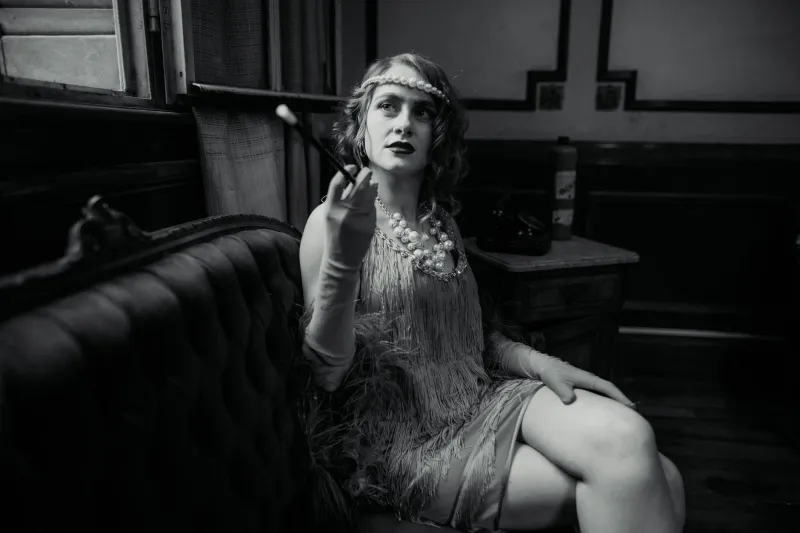
Let me paint you a picture. It's 1928 in Omaha, Nebraska. Prohibition is in full swing, the cops are on the take — or at least a suspiciously large number of them are eating very well for their salary — and somewhere beneath a nondescript building near the Old Market, a man with ink-stained fingers is writing things down that he absolutely does not want anyone else to read.
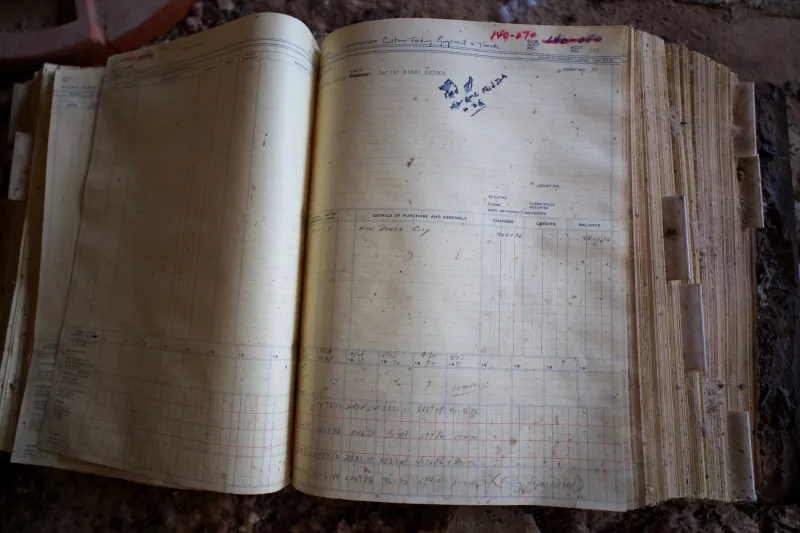
Fast-forward to 2019. A demolition crew working on a block of aging commercial real estate near 11th and Howard cracks open a basement wall and finds, wedged behind a deteriorating support beam, a standard-issue bank safe deposit box. Inside: a handwritten ledger, roughly forty pages, bound in water-damaged leather. And on every single page? A dense, baffling tangle of numbers, symbols, abbreviations, and what appear to be initials — none of it in any recognizable language, accounting system, or format anyone has been able to identify.
Omaha, you sly old city. You've done it again.
The Box That Shouldn't Exist
Here's the first weird thing: safe deposit boxes aren't exactly portable. They're bolted to bank vault walls. So how does one end up stuffed behind a basement support beam in what used to be a dry goods store — and before that, according to city records, a "social club" that received an unusual number of late-night deliveries throughout the 1920s?
Local historian Darlene Pruitt, who has spent the better part of two decades cataloging Omaha's Prohibition-era establishments, has a theory. "Several speakeasy operators kept secondary ledgers," she explained when I called her about this. "The primary books were designed to look legitimate — you know, just a social club selling ginger ale. But the real accounting? That went somewhere nobody would think to look. A loose brick. A false floor. Or, apparently, behind a load-bearing beam."
The box itself bore no bank markings. It had been stripped — deliberately, it seems. Which only makes the whole situation more delicious from a mystery-hunting standpoint.
What's Actually In There
I've seen photographs of several ledger pages, shared with me by a source who prefers to remain unnamed (they're a descendant of a figure who may or may not appear in the document, and they're not exactly thrilled about it). Here's what jumps out:
The entries appear in three columns. The first column contains what look like dates, but they don't follow a standard format — some entries have two numbers separated by a dash, others have three. The second column is a mix of letters and numbers that cryptography enthusiast Marcus Webb, who runs a cipher-cracking hobbyist group out of Bellevue, describes as "almost certainly a substitution cipher, but with a layer of transposition on top that makes it genuinely nasty to decode without a key."
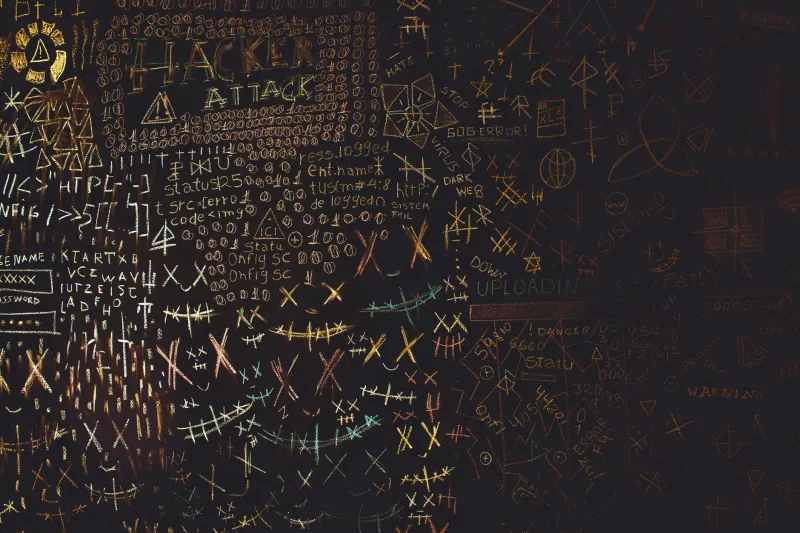
The third column, though, is where things get truly strange. It contains symbols — hand-drawn, recurring, and clearly meaningful. Webb identified at least fourteen distinct symbols used across the ledger. Some appear only once. Others show up dozens of times. A few appear to be combinations of simpler symbols, suggesting a kind of symbolic grammar.
"This isn't just bookkeeping," Webb told me, with the barely-contained excitement of a man who has found his white whale. "Someone put real effort into this. You don't build a layered cipher for a list of how many bottles of bootleg bourbon you moved last Tuesday."
Blackmail, Booze, or Something Worse?
So what was being hidden so carefully?
Theory one, and the most straightforward: it's a detailed accounting of illegal alcohol sales, supplier payments, and police bribes. Omaha's Prohibition-era corruption ran deep — a 1924 investigation by the Douglas County Attorney's office famously went nowhere after several key witnesses developed sudden cases of amnesia — and a speakeasy operator with any sense would have coded their bribe records thoroughly.
Theory two, favored by Pruitt and a few other historians: the ledger documents a blackmail operation. Omaha in the 1920s had no shortage of prominent citizens who enjoyed things they publicly condemned. A savvy operator with a back room and a good memory could accumulate a remarkable amount of leverage. The symbolic third column, in this reading, might represent individuals — coded identities for people whose names could never be written down plainly.
Theory three is the one nobody wants to say out loud but everybody's thinking: the ledger documents something darker than bootlegging or blackmail. Omaha in this era had documented connections to broader Midwest organized crime networks. Human trafficking, gambling operations, and worse moved through cities like Omaha with uncomfortable regularity. A multi-layered cipher protecting records of liquor sales feels like overkill. A cipher protecting something genuinely dangerous? That tracks.
The Descendants Problem
Here's where it gets socially complicated. Several of the initials that appear in the clearer portions of the ledger — places where the cipher seems to lapse briefly into something more legible — correspond to surnames that still carry weight in Omaha. Old money names. Names on buildings. Names that appear in local charity programs and on the donor walls of respectable institutions.
I reached out to three families whose names may appear in the document. Two did not respond. The third — through a very polished attorney — sent a letter noting that the ledger has not been authenticated, that initials are not evidence of anything, and that any suggestion of their ancestor's involvement in illegal activity would be taken seriously. The letter used the word "seriously" four times. I counted.
Which is, frankly, the most interesting response anyone has given me in months.
Can It Be Cracked?
Webb's group has been working on the cipher for about eight months. They've made partial progress — they believe the date column does represent dates, likely offset by a fixed number to obscure the actual timeline, and they've tentatively decoded what might be a unit of currency in the second column. But the symbolic third column remains completely opaque.
"We need either a key document or a parallel text," Webb said. "Something from the same hand, covering the same period, that we can compare. If anything else from that building ever surfaces, we'd love to see it."
Pruitt, meanwhile, has been quietly combing through the Nebraska State Historical Society's archives, looking for any business records, correspondence, or legal filings connected to the address where the box was found. So far: nothing. Which is itself suspicious, she notes, because almost every commercial property from that era left some paper trail.
"Someone cleaned this up," she said. "At the time, or later. The absence of records is a record."
The Ledger's Current Location
The box and ledger are currently in private hands — the individual who purchased the building lot has held onto them, apparently uncertain what to do with a potential historical artifact that might also be evidence of crimes committed by people whose grandchildren are still alive. Efforts to get them formally examined by the Douglas County Historical Society have stalled for reasons that were described to me as "administrative" but felt more like "nobody wants to be the one who opens this particular can."
The Mystery Man of Omaha will, naturally, keep digging. If you have information about the building at 11th and Howard, the speakeasy that operated there, or any Prohibition-era records that might serve as a Rosetta Stone for this cipher, you know where to find me.
Or rather — you know where to send a very carefully worded anonymous tip.
Some lessons, it seems, the 1920s taught Omaha well.