The Guest List Nobody Kept: Omaha's Elite Supper Clubs and the Deals That Weren't Supposed to Survive the Dessert Course
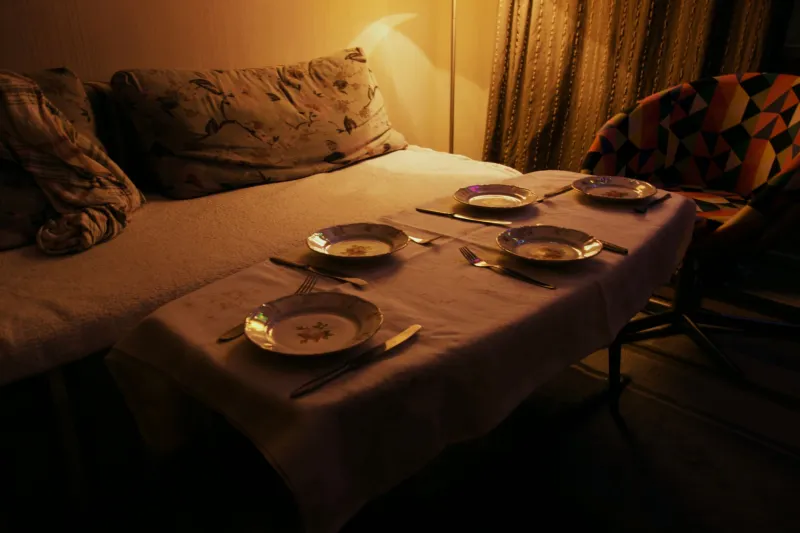
Let me paint you a picture. It's 1957. You're in a private dining room somewhere in west Omaha — the address has been given to you verbally, not written down. The lighting is dim enough to be flattering and bright enough to read a contract by. The man across from you is someone you'd never be photographed with in public. The waiter, who has worked this room for eleven years, will not remember your face tomorrow. The food is excellent. The conversation is not for this article.
This was the supper club. Not the public-facing version — the one with the checkered tablecloths and the relish tray and the prime rib special that Omaha's working professionals genuinely loved. That version was real and wholesome and fine. We're talking about the other version. The private rooms. The invitation-only dinners. The events that showed up nowhere in the society pages, despite being attended by people who showed up everywhere else in the society pages.
Omaha had several of these operations running simultaneously through the 1940s, 50s, and into the 60s. And based on what former staff members, descendants, and one extremely forthcoming retired attorney have told Mystery Man of Omaha, the menus were the least interesting thing on offer.
The Establishments in Question
We're going to be somewhat careful with specific names here, for reasons that will become clear. Several of the venues in question operated as legitimate restaurants that also had private dining arrangements — which means their descendants (in some cases, actual family members of the original owners) are still around and still have lawyers.
What we can say is that at least three establishments operating in Omaha between approximately 1942 and 1968 maintained private dining rooms that were bookable by a specific, invitation-only clientele. These weren't just reserved for birthday parties. The rooms had separate entrances. Separate staffing arrangements. And, according to multiple former employees interviewed over the past several years, separate record-keeping — or rather, a deliberate absence of record-keeping.
"You didn't write down who was there," said one woman whose father worked as a server at one of these establishments for over a decade. "That was the first thing they told him. You remember nothing, you write down nothing, you discuss nothing. The tips were very good."
What Was Actually Happening
Here's where the story gets complicated, because the answer appears to be: several different things, depending on the night and the guest list.
Some of what happened in these rooms was straightforwardly corrupt in a recognizable, almost quaint mid-century way. Business deals that bypassed regulatory scrutiny. Zoning decisions that were effectively made over a shared bottle of Scotch before being formalized in city council chambers the following week. Political endorsements — and their corresponding financial arrangements — negotiated over the entrée course.
Omaha in the postwar decades was a city undergoing rapid expansion, and the people controlling the direction of that expansion were a remarkably small group who, it turns out, ate dinner together with some regularity.
But the accounts get darker from there.
The retired attorney — who agreed to speak on background and whose identity we are protecting with the enthusiasm of someone who has read enough true crime to know how these stories sometimes end — described being present, as a young associate, at one supper club dinner where a conversation took place that he still characterizes as "the most explicit discussion of evidence suppression I have ever heard, and I practiced law for forty years."
He won't say more than that. We didn't push.
The Blackmail Hypothesis
Several of the accounts we collected independently raised the possibility that at least one of these establishments was being used not just as a venue for deals but as a mechanism for generating leverage. The logic isn't complicated: if you put powerful people in a room where things happened that they couldn't afford to have known, and if someone was keeping records that the guests assumed weren't being kept, you had the architecture of a remarkably effective blackmail operation.
We want to be clear that we cannot confirm this happened. What we can confirm is that multiple people, speaking independently and with no apparent coordination, described the same basic dynamic — the sense that the rooms themselves were somehow watching, that the discretion being offered was also a kind of trap.
One former kitchen worker put it with memorable simplicity: "Some of those men came in looking like they owned the place. They left looking like the place owned them."
Why the Historical Record Is So Quiet
The conspicuous silence around these establishments in Omaha's historical documentation is itself a kind of evidence. Supper clubs of the era were generally well-documented — they advertised, they appeared in gossip columns, they showed up in the background of society photographs. The specific establishments we're describing are notable for how little paper trail they left, particularly regarding their private operations.
Some of this is almost certainly mundane record destruction — documents get lost, businesses close and their files get thrown out. But some of it appears more deliberate. One Douglas County records researcher described finding references in city inspection documents to an establishment that she subsequently could not locate in any other archive. "It's like it was partially erased," she said. "Some things made it through and some things didn't, and the pattern of what survived is very convenient for some specific people."
The Dessert Course
Here's the thing about secrets that were kept in rooms full of powerful people: eventually, the powerful people die. And sometimes their children talk. And sometimes their staff outlived them and stopped feeling bound by tips that were paid sixty years ago.
Mystery Man of Omaha has been collecting these accounts for a while now, and what's emerging is a picture of a parallel civic life in mid-century Omaha — one that ran alongside the official story of boosterism and Midwestern rectitude and operated by entirely different rules.
We're not done reporting this one. If you have a connection to Omaha's supper club era — as a guest, a staff member, a family member, or someone who inherited a box of documents that you're not quite sure what to do with — our inbox is open and our discretion is, unlike some of those dining rooms, genuine.