She Heard Everything and Then She Died: The Eerie Fates of Omaha's Telephone Operators
Let's establish something right away: if you wanted to know everything happening in Omaha between, say, 1922 and 1955, you did not hire a private detective. You did not bribe a city councilman. You did not stake out the Blackstone Hotel with a pair of opera glasses.
You got a job as a telephone operator.
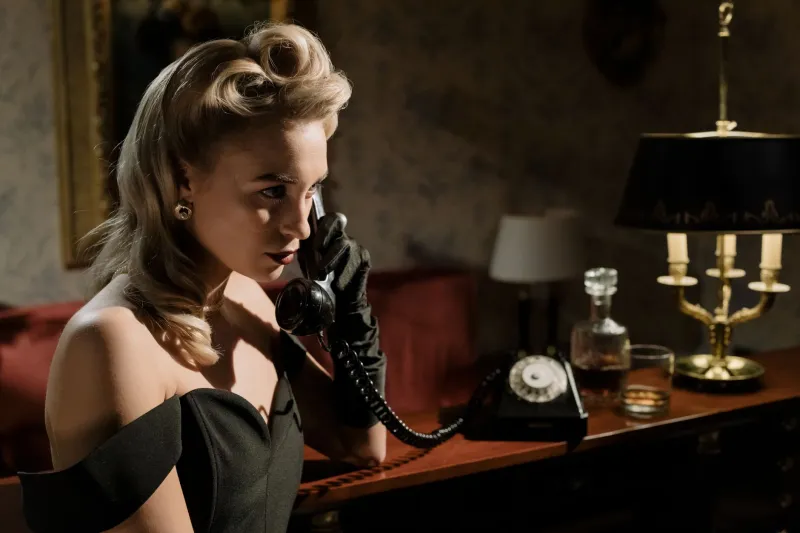
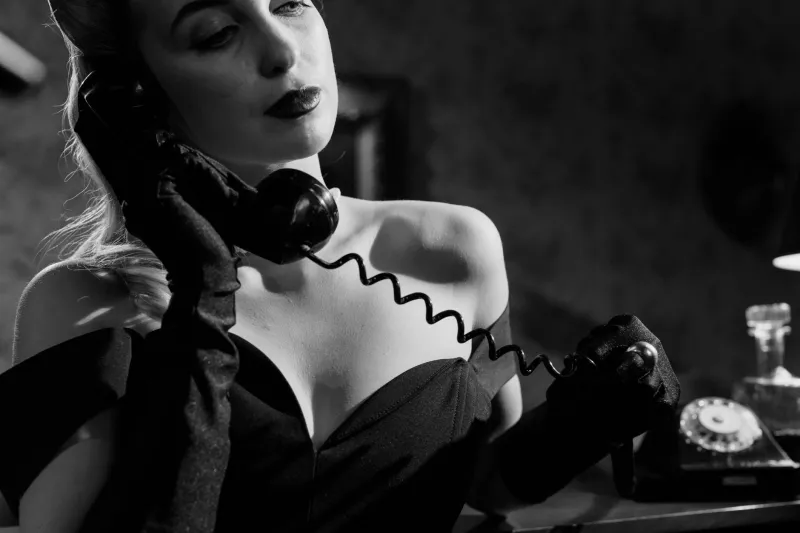
These women — and they were almost exclusively women — sat at the literal crossroads of every conversation that mattered in this city. Business deals. Domestic arguments. Whispered arrangements between people who should not have been arranging anything. The switchboard operators of Omaha's Northwestern Bell exchanges didn't just connect calls. They heard calls. And in an era when call monitoring was an art form practiced entirely at the discretion of the operator plugging in the cord, "accidentally" listening was less a moral failing than an occupational reflex.
Which makes the deaths of at least a dozen of them, across three decades, considerably more interesting than their official records suggest.
The Paper Trail That Doesn't Quite Add Up
Dig into the Omaha World-Herald archives from the late 1920s through the early 1950s and you'll find brief, respectful notices. "Miss Edna Colworth, 34, of the Farnam Street exchange, died Tuesday after a brief illness." "Mrs. Lola Brannick, telephone operator of twelve years, passed unexpectedly at her home on Saturday."
Brief illness. Passed unexpectedly. Heart failure, in a 31-year-old.
Now, before the skeptics among you start composing strongly worded letters: yes, people died young in those decades. Medicine was limited. Working conditions were genuinely brutal — the early switchboard rooms were hot, loud, chemically fragrant from the equipment, and demanding in ways that ground people down fast. None of that is in dispute.
What is in dispute — at least among the families of several of these women — is whether the official explanations were ever seriously investigated, or simply accepted because nobody particularly wanted to look harder.
Death certificates from Douglas County for this period occasionally list causes so vague they border on comedic. "Cardiac episode of uncertain origin" appears with striking frequency among women under forty. "Nervous collapse" was apparently a medical diagnosis robust enough to close a file. In at least three cases located by this writer, the attending physician was the same man — a Dr. Harlan Veitch, whose own records were destroyed in a 1961 office fire that Douglas County's own fire marshal noted was "of undetermined origin."
Coincidence. Obviously. Almost certainly.
What the Families Remember
In 2019, a woman named Patricia Ohlendorf sat down with a local oral history project and described what her grandmother had told her about a coworker named "Ruthie" — last name deliberately withheld, even now — who worked the overnight exchange on Douglas Street sometime around 1938.
Ruthie, according to the grandmother, had mentioned to several colleagues that she'd overheard a call she wasn't supposed to hear. The grandmother didn't know the specifics. What she knew was that Ruthie told her supervisor. And that two weeks later, Ruthie was gone — not dead, not immediately, but transferred to a different exchange in a different city, and then simply... not heard from again.
"Grandma said they all understood what that meant," Ohlendorf told the oral history interviewer. "You learned to plug in the cord and stare at the wall."
A different family, contacted through a Nebraska genealogy forum, described their aunt — a switchboard worker at the Omaha exchange during the late 1940s — who had apparently kept a small notebook of "things she'd heard that didn't make sense." The notebook disappeared from her apartment shortly after her death from what was ruled a sleeping powder overdose. Her sister maintained for the rest of her life that the aunt had been terrified of sleeping pills and never took them voluntarily.
The sister is gone now. The notebook was never found.
The Institutional Silence Machine
Here's what makes this more than just a collection of sad anecdotes: Northwestern Bell, like most major telephone companies of the era, maintained rigorous internal conduct policies that explicitly addressed operator discretion. Employees signed agreements — some of them legally binding, some of them simply terrifying — promising not to disclose the contents of any call, to any party, under any circumstances.
On its face, that's reasonable. Privacy matters. But the enforcement culture that grew up around those agreements was something else entirely.
Former employees who spoke to labor historians in the 1970s described a workplace atmosphere in which reporting suspicious content — even a genuine threat, even something that sounded like a crime in progress — was actively discouraged. The official policy was to disconnect and report to a supervisor. What happened after that was the supervisor's problem. Operators were trained, essentially, to forget.
In a city where organized crime had a documented and enthusiastic presence during Prohibition and well beyond it, and where legitimate business and illegitimate business shared a remarkably comfortable social calendar, that institutional amnesia was enormously convenient for a great many people.
The Omaha Exchange Fire of 1947
On a Tuesday evening in March 1947, a small fire broke out in the records room of one of Omaha's downtown telephone exchanges. The fire was contained quickly. Nobody was hurt. The local paper ran four sentences on it.
What the paper did not report — because nobody thought to ask, or because somebody made sure nobody asked — was that the records room in question housed the call log books for the previous eighteen months. These were handwritten ledgers maintained by operators, noting call times, durations, and occasional notations about line quality issues or unusual interruptions.
Those logs were gone. Completely. The fire marshal's report described the damage as "concentrated and rapid," which is a technical way of saying the fire knew exactly where it was going.
Two operators who had worked that exchange were transferred within the month. One moved to Kansas City. The other's forwarding address, according to her landlord at the time, was never provided.
What We're Left With
Let's be honest about the limits of this investigation, because Mystery Man of Omaha is nothing if not a responsible purveyor of documented speculation. We have fragmentary newspaper records. We have death certificates with causes that raise eyebrows rather than definitively answering questions. We have family memories, which are real and meaningful but not courtroom evidence. We have one destroyed records room and one destroyed doctor's office and a pattern that is either deeply sinister or simply the accumulated noise of hard lives lived in difficult decades.
What we don't have is a smoking gun. Or a smoking switchboard, as the case may be.
What we do have is the persistent, nagging sense that Omaha's telephone operators occupied a uniquely dangerous position in the city's information ecosystem — and that the people who benefited most from their silence had both the motive and the means to ensure it.
If you have family members who worked the Omaha telephone exchanges before 1960, and if they ever said anything that stuck with you — anything at all — this writer would very much like to hear from you.
Plug in the cord. I'm listening.