You Only Join Once: The Omaha Lodges Where Members Learned to Stop Talking
Every city has its Masons. Every city has its Elks, its Moose, its Rotarians — the respectable fraternal infrastructure that keeps the wheels of civic bonding greased and the ceremonial aprons in business. Omaha had all of those, in perfectly ordinary abundance.
But Omaha also had the others.
The smaller lodges. The ones that met in buildings that have since been demolished, in rooms that are now parking lots, behind doors that nobody photographed. The ones with membership records that seem to have been dispersed with the deliberate efficiency of a document shredding party. The ones whose former members, when located — sometimes after years of genealogical detective work — tend to smile pleasantly and say they don't remember much.
They remember. They just don't want to talk about it.
The Concordia Society of the Western Plains
Let's start with the most documented of the underdocumented.
The Concordia Society of the Western Plains appears in Omaha city directories from 1931 through 1958, listed under "Fraternal Organizations" with an address on North 24th Street and no further elaboration. It does not appear in any newspaper coverage during that period, which is itself remarkable — Omaha's mid-century papers covered lodge news with the enthusiasm of a small-town gossip columnist. Installation of officers, charity dinners, visiting dignitaries from other chapters: all of it was considered print-worthy.
The Concordia Society generated none of this. Not a single social notice. Not a single officer listing. Not a single mention of a charity event, a dinner, or a visiting dignitary.
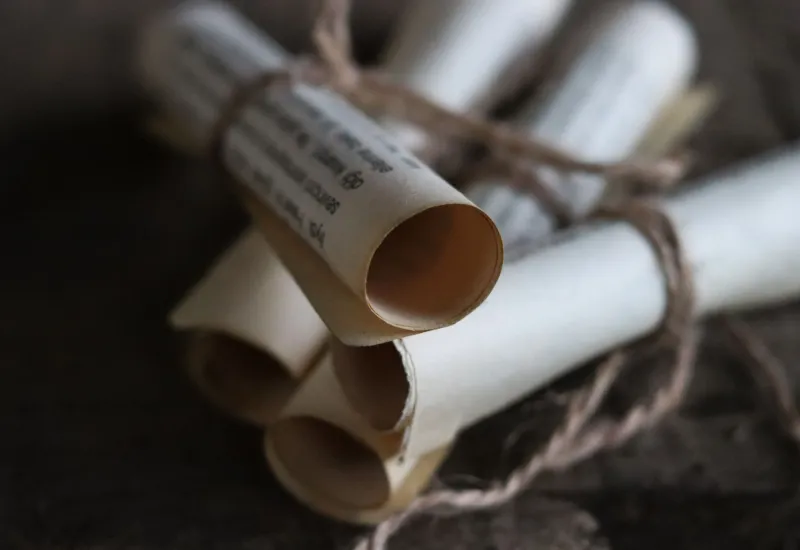
What it did generate was a set of membership certificates, three of which have surfaced in estate sales over the past twenty years. They are striking documents. Elaborate engraving, dense with symbolic imagery — a pair of scales, a closed eye (not an open one, notably), a hand holding what appears to be either a quill or a very specific type of knife, depending on your interpretive generosity. The text is in English but structured in a way that reads like it was translated from something else, something older, by someone who was in a hurry.
The certificates name no officers. They list no chapter number. They are signed with a single initial: "V."
The grandson of one certificate holder, reached through a Nebraska genealogy network, said his grandfather had kept the certificate in a locked box and referred to the Concordia Society exactly once in his recorded memory — to say that he'd joined it young, that he'd learned things he wished he hadn't, and that he'd stopped attending "when I understood what stopping attending meant."
He declined to elaborate. He died in 1979. The locked box was empty when the family found it.
The Peculiar Case of the Meridian Brotherhood
The Meridian Brotherhood is harder to pin down because it may have operated under multiple names — or because its members were simply better at paperwork disposal than most.
What we know comes primarily from two sources: a 1953 letter found in the Douglas County Historical Society's uncatalogued miscellany collection, and the recollections of a woman named Dolores Fitch, now in her late eighties, who was interviewed by a local historian in 2017.
The letter, written by an unnamed correspondent to an unnamed recipient, references "the Brotherhood's difficulties with the Meridian business" and expresses concern that "certain members have spoken outside the appropriate channels." It concludes with a reminder that "the obligations undertaken at the third threshold are not conditional."
Dolores Fitch's contribution is more colorful. Her late husband, Gerald, had been a member of what she called "his lodge" — she never knew the formal name — during the 1940s. Gerald was a cheerful man, she said, except on the evenings he returned from lodge meetings, when he was quiet in a way that was different from his ordinary quietness.
"He'd come home and wash his hands twice," she told the interviewer. "Not like he'd been doing dirty work. More like he was being careful about something. I asked him once what they did at those meetings and he said they discussed philosophy. Gerald had never discussed philosophy a day in his life before he joined."
Gerald left the lodge abruptly in 1951. He never explained why. He burned something in the backyard firepit that autumn — papers, Dolores thought, though she never saw them clearly. He was, she said, noticeably happier afterward.
Decoded Regalia and What It Might Mean
Several pieces of lodge regalia from unidentified Omaha fraternal organizations have passed through local antique shops and estate sales over the decades. A sash currently held by a private collector in Dundee features embroidery that a symbologist consultant — contacted for this article and asked to remain unnamed, which is exactly the energy we're working with here — described as "a non-standard synthesis of Masonic, Rosicrucian, and what looks like something entirely invented."
The invented portion is the interesting part. It includes a repeated motif that the consultant called "a closed circuit" — a symbol suggesting completion, containment, and, in some esoteric traditions, the binding of an oath that cannot be dissolved by ordinary means.
"Whoever designed this," the consultant said, "wanted the wearer to feel permanently enclosed. Like joining was a door that only opened one way."
That tracks with what descendants consistently report: the organizations were easy to enter and apparently very difficult — socially, professionally, possibly otherwise — to leave.
The Members Who Left Town
Cross-referencing Omaha city directories from the 1930s through the 1960s against the names appearing on the three recovered Concordia Society certificates reveals a pattern that is either deeply meaningful or an extraordinary coincidence.
Of the eleven legible names on those certificates, nine had left Omaha by 1960. Not died — left. Several relocated to cities in other states within relatively short windows of time, often without obvious professional reasons. One moved to Portland. One to Albuquerque. One, according to a brief World-Herald notice, "departed for opportunities in the Pacific Northwest" in 1955, which is the kind of phrasing that invites exactly the questions it refuses to answer.
The two who stayed — both of whom lived into the 1970s — have no descendants who will speak about them. One family cited privacy. The other family, contacted through three separate channels, did not respond at all.
What the Doors Don't Say
The building on North 24th Street where the Concordia Society held its address is long gone. The block it stood on has been rebuilt twice since the 1960s. Whatever the walls of that lodge room absorbed — whatever conversations, whatever ceremonies, whatever moments that made men wash their hands twice afterward — those walls are rubble and then foundation and then someone else's floor.
Omaha's mid-century lodge culture was vast and mostly benign. Most of it was exactly what it advertised: men in funny hats eating mediocre chicken and raising money for hospitals. But the edges of that culture — the smaller organizations, the ones that kept no press, generated no social notices, and seemed to regard membership as a permanent condition rather than a voluntary association — those edges are blurrier than they should be.
The Mystery Man is not in the business of definitive conclusions. He is in the business of doors that don't open and questions that don't get answered and the unsettling sense that some secrets in this city were organized very, very deliberately.
If you have regalia, certificates, or memories that belong to any of the above — or to any Omaha lodge that doesn't appear in the standard histories — you know where to find us.
We'll keep the third threshold a secret. Promise.