Static and Gone: Omaha's Rogue Radio Stations That Broadcast Until They Didn't
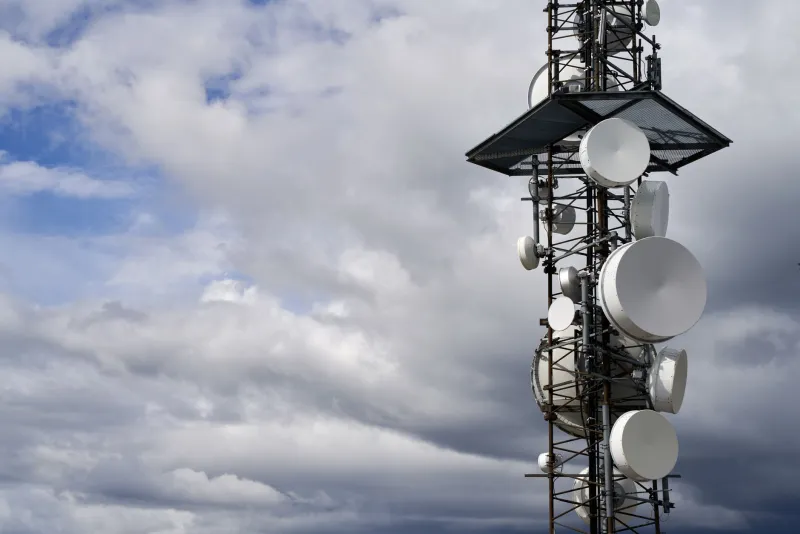
Radio is a ghost medium even when it's working perfectly. You can't see it. You can't hold it. The signal goes out and either somebody's there to catch it or it just keeps traveling, forever, into space, carrying whatever it was saying to an audience of no one.
Omaha's forgotten independent radio stations understand this better than most.
This city had its powerhouse broadcasters, obviously — the big clear-channel AM giants that could be heard in six states on a still night, the network affiliates with their marble lobbies and their union engineers and their very deliberate relationship with local power. Those stations are documented. Those stations have Wikipedia pages and commemorative mugs.
The stations we're interested in today do not have Wikipedia pages. Some of them barely have paper trails. What they have are listeners who remember them — sometimes vividly, sometimes only as a half-recalled frequency, a voice, a song that didn't fit anywhere else on the dial — and a collection of gaps in the historical record that are shaped, very precisely, like things that were removed.
KZOB and the Night It Just Stopped
KZOB is the easiest place to start because it's the most documented of the underdocumented, which is admittedly a low bar.
Operating from a converted warehouse space somewhere in the vicinity of the stockyards district — the exact address has never been confirmed — KZOB broadcast on an AM frequency for what appears to have been approximately fourteen months in the early 1950s. FCC records confirm the license application. They do not confirm a license approval, which means KZOB was either operating on a special temporary authorization or operating without one, and the FCC's files for that period have what agency archivists politely call "significant gaps."
What KZOB broadcast, according to four separate listener accounts collected by a University of Nebraska oral history project in the 1980s, was a mix of jazz, agricultural commodity prices read in a voice that one listener described as "like your most nervous uncle," and occasional long-form commentary on local political matters that the major stations weren't touching.
Then, on a Tuesday evening — the exact date is disputed, but the accounts cluster around late 1953 — KZOB went off the air in the middle of a broadcast. Not at the end of a program. Not at a natural sign-off point. Mid-sentence, according to at least two listeners who were paying attention.
The warehouse space, when a curious listener drove past it the following week, was empty. Not burned, not obviously damaged. Just empty, with a For Rent sign in the window that the building's owner, when contacted decades later by a researcher, had no memory of placing.
The Fire at the Hillside Tower
This one has a physical location, which is either reassuring or concerning depending on your disposition.
In 1948, a small independent broadcaster operating under the call letters WKRN — not to be confused with the Nashville station that later adopted similar letters — maintained a transmitter tower on a hill in the western reaches of Douglas County. The station's studio was downtown, connected to the tower by telephone line in the standard arrangement of the era.
WKRN broadcast what its owner, a man named August Prell, described in his FCC license application as "educational and cultural programming of broad community interest." In practice, according to the one surviving issue of a local neighborhood newsletter that mentioned it, WKRN was airing interviews with labor organizers, commentary on working conditions at several of Omaha's larger employers, and a weekly program called "The Open Question Hour" in which listeners could telephone questions that Prell would read on air.
In March of 1948, the transmitter tower burned down. The fire marshal's report listed the cause as "lightning strike," which would be more convincing if March is not, historically, Omaha's most lightning-intensive month. The studio equipment downtown was found to have been removed before the fire — not destroyed, removed — and August Prell had left Omaha approximately ten days prior to the fire, destination unknown.
Prell's FCC license was revoked the following month for "failure to maintain broadcast operations." The revocation notice was mailed to his Omaha address. It was returned undeliverable.
KQMR and the Frequency That Shouldn't Have Existed
This is where things get genuinely strange, and the Mystery Man wants to be upfront that the sourcing here is thinner than he'd like — but thin sourcing on a genuinely weird story is still a story.
In the late 1950s, several Omaha residents reported picking up an unlicensed signal on a frequency that, according to the FCC's allocation tables for the period, was not assigned to any broadcaster in the region. The signal was inconsistent — stronger on some nights than others, apparently dependent on atmospheric conditions — and what it broadcast was, by multiple accounts, unusual.
One listener described it as "someone reading names." Not a list, not a directory — just names, read slowly, with pauses between them, for as long as the signal lasted. Another described music that she couldn't identify and still can't, decades later: "Not jazz, not classical, not anything I'd heard on any other station. It sounded like it was from somewhere else."
A third listener, a ham radio operator who had the equipment to triangulate a signal's approximate origin, placed the source somewhere in the vicinity of the Missouri River bottomlands east of the city. He drove out to look. He found, he said, a small wooden structure — a shed, essentially — with antenna equipment that appeared to have been recently active. He did not find anyone there. He did not go back.
KQMR, if that was ever its designation, does not appear in any FCC records. It appears in exactly three written accounts, all from the same oral history collection, and in the memories of a handful of people who aren't entirely sure they didn't dream it.
What Omaha's Airwaves Were Protecting
Here's the through line that the Mystery Man keeps tripping over: the stations that vanished fastest were the ones broadcasting content that made somebody uncomfortable. Labor commentary. Political questions. Names that maybe weren't supposed to be read aloud in public.
Omaha in the late 1940s and 1950s was a city with significant business interests, significant organized labor tensions, and a political culture that was, to put it generously, not enthusiastic about public accountability. The big stations — the ones with the marble lobbies — understood this implicitly. They had advertisers to protect. They had relationships to maintain.
The small independents didn't have those relationships. Which meant they could say things. And which meant that when they stopped being able to say things — when the tower burned, when the license evaporated, when the warehouse emptied overnight — nobody with a platform was particularly motivated to ask why.
The FCC's regional records for Nebraska from this period have been partially digitized. The gaps in those records are, if you look at them long enough, shaped like exactly the stations we've been discussing.
The Signal Is Still Out There
Somewhere in the analog archives of Omaha — in attics, in the back shelves of estate sales, in the notebooks of listeners who wrote down what they heard because they sensed it mattered — there are probably more fragments. More call letters. More Tuesday nights when a voice stopped mid-sentence and the frequency went to static and nobody official noticed or admitted to noticing.
If you grew up in Omaha and you remember a station that nobody else seems to remember, the Mystery Man wants to hear from you. Tune to wherever you find us. We're listening.
We're always listening.