She Heard Everything: The Telephone Operator Who May Have Listened In on an Omaha Murder
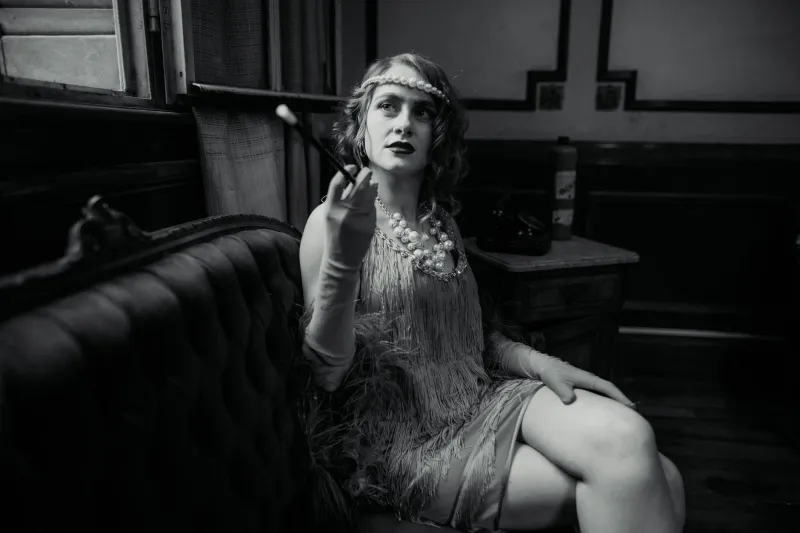
Let me paint you a picture. It's somewhere in the mid-1920s. Omaha is humming — literally. The city's telephone exchange is a living, breathing nervous system, and at its center sit rows of young women in headsets, fingers dancing across switchboards, connecting call after call after call. They hear everything. Arguments between business partners. Whispered romances. The nervous stutter of someone delivering bad news.
And then, one night, allegedly — according to fragments buried in old newspaper clippings, a church record, and one very peculiar letter to the editor that nobody seems to have followed up on — one of those operators may have heard something far worse.
Something that sounded a lot like a man being killed.
The Case Nobody Officially Named
Here's the frustrating part about digging into this particular corner of Omaha history: the crime itself is slippery. It doesn't have a tidy case number stamped across a manila folder. What we do have are references — oblique, maddening, almost casual references — to a violent incident at a North Omaha rooming house sometime between 1923 and 1927, in which a man whose name appears variously as "Eddins," "Eddings," or simply "E." was found dead under circumstances that local authorities apparently chose not to investigate with any particular urgency.
The Omaha World-Herald of that era was not exactly shy about crime coverage. Murders, robberies, and scandalous divorces filled column inches with cheerful regularity. So the near-total silence around this particular incident is, itself, a clue. Something — or someone — kept this one quiet.
And standing in the wings of that silence, if you squint hard enough at the historical record, is a woman.
The Operator at the Center of It All
Her name, to the extent that we can reconstruct it, was likely Margaret — a common enough name for the era that it both helps and hurts the research. She worked at one of Omaha's downtown telephone exchanges, almost certainly the one operating out of the Douglas Street corridor, which by the mid-1920s was routing thousands of calls per day through a warren of copper wire and human patience.
The letter to the editor — published in a smaller Omaha weekly that had the good journalistic instincts to ask questions and the bad institutional luck to fold before anyone answered them — describes a woman who worked the night shift and who, during a call she was in the process of connecting, heard what she described to at least one coworker as "men shouting, then a terrible sound, then nothing."
She reportedly told this coworker she intended to report what she'd heard to her supervisor.
She apparently never did. Or if she did, the supervisor didn't pass it along. Or if the supervisor passed it along, the police didn't write it down. You see how this works. In Omaha in the 1920s, the telephone operator was simultaneously the most connected person in the city and, institutionally speaking, practically invisible.
Why Her Voice Was Never Officially Recorded
This is where the story stops being a quirky historical footnote and starts feeling genuinely uncomfortable.
Telephone operators in this period occupied a strange social position. They were trusted with intimate access to private communication — a level of access that, had it been held by a man in a suit, would have made him a person of considerable consequence. But operators were predominantly young women, often working-class, employed by companies that had very clear ideas about what their workers should and should not involve themselves in.
Reporting an overheard conversation to law enforcement? That was murky territory. Operators were technically bound by confidentiality obligations, informal as those may have been in the 1920s. Coming forward as a potential witness to something criminal could mean losing your job. It could mean public scrutiny. It could mean being dismissed as hysterical, mistaken, or simply overstepping.
And so, if Margaret did hear something, the system around her was almost perfectly designed to ensure that what she heard went nowhere.
The Switchboard as Accidental Archive
What makes this case — such as it is — genuinely fascinating from a historical detective's perspective is what it reveals about the telephone exchange as an unintentional record-keeping system.
Calls in the 1920s weren't recorded, obviously. But operators remembered. They talked to each other. They noted unusual calls in the same casual way that bartenders remember the customer who ordered something strange. The switchboard floor was, in a very real sense, a living archive of the city's private life — one that existed entirely in human memory and evaporated the moment those women went home, changed jobs, or simply decided that what they knew wasn't worth the trouble of telling.
If Margaret witnessed something — aurally, through a crackling copper line on a night shift in the mid-1920s — that knowledge lived and died with her. There was no mechanism to preserve it. No protocol. No detective who thought to ask.
What the Silence Tells Us
I've spent a not-insignificant amount of time in the Douglas County historical archives, in the microfilm room at the Omaha Public Library, and in the digital collections of Nebraska newspaper archives, looking for any official acknowledgment that this operator was ever interviewed, ever approached, ever considered as a resource by whoever was nominally investigating the death of the man in the rooming house.
I found nothing. Which is, as any amateur sleuth worth their magnifying glass will tell you, itself a finding.
The absence of her name in the record isn't proof that she was ignored. But it's consistent with a pattern that historians of women's labor and early telecommunications have documented extensively: the telephone operator as invisible infrastructure. Present for everything. Credited for nothing. Consulted almost never.
The Line Goes Cold
Margaret — if that was her name — probably lived out a perfectly ordinary Omaha life after whatever she heard on that shift. She may have married. She may have left the exchange for other work, as most operators did by their mid-twenties. She may have told the story at a kitchen table once or twice and then let it go, the way you let go of things that the world has made clear it isn't interested in hearing.
The man in the rooming house — Eddins, Eddings, E. — stayed dead and unstudied.
And the city kept connecting calls, kept humming along its copper nervous system, kept burying its secrets in the space between the ring and the answer.
Somewhere out there, I genuinely believe, there's a family letter. A diary. A church record with a name in the margin. Something that pulls this story from the almost-known into the actually-known.
If you've got it, you know where to find me. I'll be the guy with the headset on, listening very carefully.
Mystery Man of Omaha is always accepting tips, leads, and extremely old newspaper clippings. Anonymity guaranteed. Curiosity mandatory.