The Recipe Detectives: Chasing Omaha's Vanished Immigrant Kitchens Through Ash, Memory, and Miracle Scraps of Paper
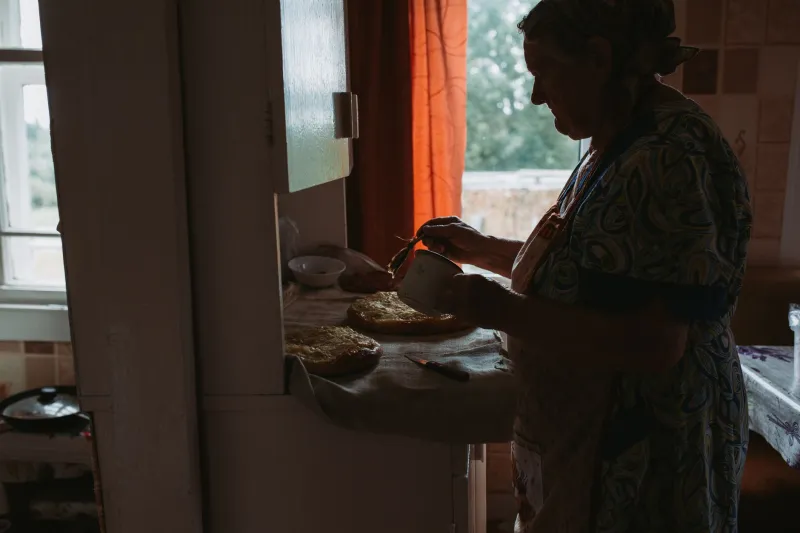
Urban exploration, at Mystery Man of Omaha, doesn't always mean putting on a hard hat and descending into a condemned building. Sometimes it means sitting across a kitchen table from an 89-year-old woman who is watching you very carefully while you attempt to describe the flavor of something she made forty years ago, and you're getting it wrong, and she is patient about it in a way that is somehow more intimidating than impatience would be.
This is the story of Omaha's lost culinary heritage — the recipes that burned, the flavors that emigrated and then quietly evaporated, and the extraordinary people who are keeping the last fragments alive through sheer force of memory and stubbornness.
The Fire Department Records Nobody Expected to Be Useful
Here is a research tip from the Mystery Man of Omaha, offered freely and with no expectation of credit: if you want to understand what a neighborhood had, look at what it lost.
Omaha's fire department records from the 1920s through the 1960s, available in various states of completeness through the city's archives, document not just addresses and damages but sometimes — particularly in the more detailed reports — the contents of destroyed buildings. These records were primarily useful for insurance purposes. They were not written with future food historians in mind. And yet, scattered through the incident reports for the neighborhoods that housed Omaha's Czech, German, Italian, and Lebanese communities, there are references that stop you cold.
A 1934 report on a fire at a Czech-owned bakery on the south side mentions, in the inventory of losses, "recipe ledgers, 3 volumes, handwritten, estimated value negligible." Negligible! Three volumes of handwritten recipes, gone, and the insurance adjuster's only concern was that they weren't worth much money. The Mystery Man of Omaha would like to have a word with that insurance adjuster, but unfortunately, the statute of limitations on that particular grievance has expired.
Similar notations appear in reports from a German butcher's shop, an Italian family's restaurant, and — most heartbreakingly — a Lebanese social club that served as a community hub for Omaha's small but deeply rooted Arab immigrant population. In each case, the culinary knowledge encoded in those lost documents is simply gone. What survives is what people remembered.
Sitting With the Rememberers
Finding those people — the ones who carry the flavors in their heads — requires a specific kind of investigative patience. You can't exactly post a Craigslist ad asking for elderly immigrants willing to reconstruct lost recipes with a stranger from a mystery blog. (We considered it. We decided against it.)
What actually works is slower and more rewarding: church directories, ethnic social organizations, community newsletters that have been running for decades, and the simple, underestimated power of one introduction leading to another. The Czech community in Omaha, smaller now than it was at its peak but still present and still proud, turned out to have an informal network of family recipe keepers who had never particularly thought of themselves as archivists but who had, collectively, preserved an extraordinary amount.
One woman — we'll call her Marie, because she requested that we not use her full name, citing a charming concern that "people will start calling and asking me to cook things" — produced, from a box in her spare bedroom, a collection of index cards covered in her grandmother's handwriting. The cards were in Czech. The measurements were approximate at best, the kind that assume the reader already knows roughly what they're doing. Several called for ingredients by names that required translation assistance.
Among them: a recipe for a yeast-risen pastry filled with poppy seeds and honey that Marie says she has never successfully replicated to her grandmother's standard, despite decades of trying. "She knew something I don't know," Marie said, with the particular philosophical resignation of someone who has made peace with an unsolvable problem. "I think it was her hands."
The Italian Thread and Where It Led
Omaha's Italian immigrant community, concentrated historically in areas of the city that have since been substantially transformed by development and demographic shift, left behind a culinary footprint that is both more documented and more frustratingly incomplete than you might expect.
What turned up in family archives — accessed through a combination of direct outreach and sheer persistence — suggests a regional specificity that has largely been flattened by time. The Italian families who settled in Omaha came from particular places: specific villages in Sicily, in Calabria, in the Veneto. They brought not generic "Italian food" but hyper-local traditions, the kind of thing that would be completely unfamiliar to someone from a different region of the same country.
One family shared a handwritten recipe for a braised rabbit preparation that, according to the family's oral history, was specific to their ancestral village and essentially unknown outside it. The recipe had survived because it was written on the back of a letter from Italy — the letter itself long since lost to illegibility, but the recipe on the reverse side preserved by the simple accident of someone deciding to save the paper.
Lebanese Omaha and the Flavor of Displacement
The Lebanese community's culinary history in Omaha is perhaps the most poignant thread in this investigation, partly because it involves a double displacement: the original migration from Lebanon, and then a second wave of disruption as Omaha's urban renewal projects of the mid-20th century demolished the neighborhoods where that community had put down roots.
What survived the bulldozers, in terms of food tradition, lives now in the memories of people in their seventies, eighties, and nineties — people who remember helping grandmothers make dishes whose names they still know in Arabic, whose smells they can describe in precise detail, but whose exact preparation has become hazy with time.
A community elder who agreed to speak with us — a woman whose grandparents arrived in Omaha in the early 1900s — described a particular lamb preparation that her family made for holidays, involving spices she cannot fully name in English and a technique she remembers watching but never fully learned. "I keep thinking I'll figure it out," she said. "I'm running out of time to figure it out."
That sentence is the whole story, really. The urgency of it. The ticking clock that no archive can fully stop.
What Gets Saved and What Gets Lost
The honest conclusion of this investigation is uncomfortable: most of it is gone. The fires took some. Development took more. The ordinary entropy of time, and the false assumption that someone else would write it down, took the rest.
What remains is precious precisely because of its scarcity. The index cards in Marie's spare bedroom. The recipe on the back of the illegible letter. The flavor that an elderly woman can describe perfectly and reproduce only approximately.
Omaha's food history is not gone. But it is running. And the only way to catch it is to sit down, pour some coffee, and listen very carefully to the people who are still carrying it.